Payment terms in Indian sorghum trade balance the exporter's risk of shipping before receiving full payment against the buyer's risk of paying before receiving verified cargo. The most common structures - TT advance, Letter of Credit (LC), DP (Documents against Payment) and hybrid TT+BL - each allocate this risk differently. This guide explains when each payment structure is used, what documentary evidence each requires, and how to negotiate terms that protect both sides while keeping the deal moving.
Sorghum payment terms in practice: 30% TT advance + 70% TT against copy BL is the most common structure for established relationships. First-time buyers: Letter of Credit (LC at sight) with an established Indian bank provides the strongest buyer protection. For large volumes (5+ FCL): DP (documents against payment) through a correspondent bank is an efficient alternative to LC.
Ready to Import Indian Sorghum?
Get an instant FOB and CIF cost estimate including shipping and insurance.
Why Payment Terms Matter in Grain Trade
Payment terms decide when risk moves, when documents are released and how much working capital each side must carry. For sorghum contracts, buyers should connect payment milestones to procurement, cleaning, inspection, loading and bill of lading release rather than treating payment as a separate finance clause.
The safest payment structure connects each transaction to a visible execution milestone: procurement confirmation, sample approval, loading plan, scanned documents or bill of lading release. Buyers should avoid paying the final balance before the agreed inspection evidence is available.
TT Advance and Balance Against Documents
Telegraphic Transfer (T/T) is widely used for standard cargo sizes. A typical setup involves a 30% advance deposit to secure the sorghum lot from the mandi and book packaging bags, and the remaining 70% paid upon presentation of scanned copies of the shipping documents, including the Bill of Lading (B/L), Phytosanitary certificate, and quality inspection reports.
This structure ensures the supplier has the necessary capital for domestic logistics and port handling, while the buyer retains the leverage of the balance payment until the sorghum is verified as loaded on board the vessel.
LC at Sight for Sorghum Shipments
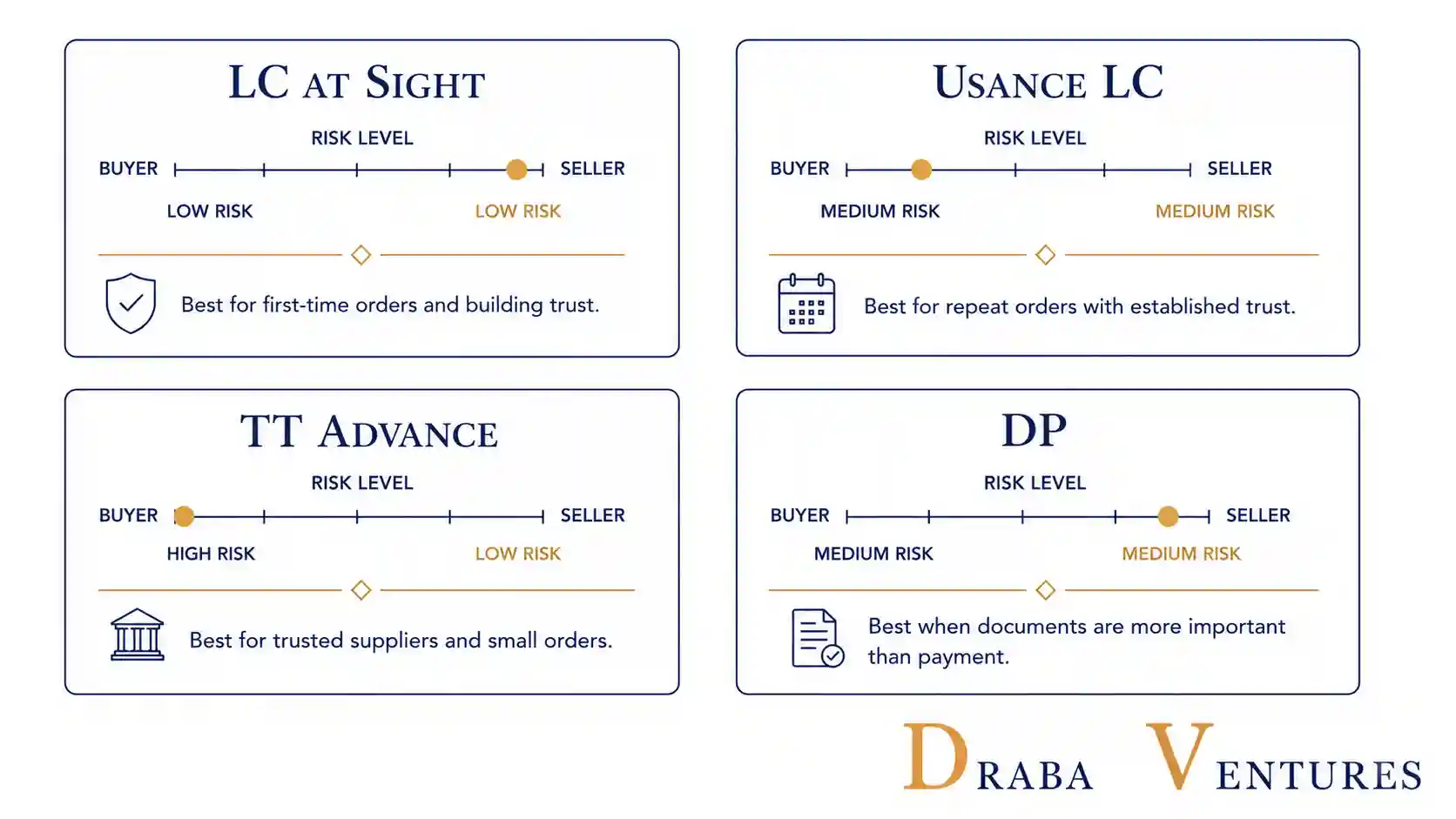
For new trade relationships or high-volume bulk contracts, an Irrevocable Letter of Credit (L/C) at sight is the standard security instrument. It protects both parties by ensuring that payment is only released by the issuing bank when the seller presents clean, compliant shipping documents that match the L/C terms exactly.
Importers should carefully check details such as the allowed tolerance for cargo weight (+/- 5%), shipment deadlines, and spelling of the grain name (sorghum vs. jowar) to avoid bank discrepancies that can lead to demurrage costs at the destination port.
SBLC-Backed Supply Contracts
A Standby Letter of Credit (SBLC) is ideal for annual or multi-month supply programs. It serves as a financial guarantee that remains in the background while the buyer pays for individual monthly container shipments using standard T/T within a specified number of days (e.g., 5 to 10 days) after receiving the scanned B/L.
If the buyer defaults on a payment, the exporter can draw down on the SBLC. This approach minimizes transaction bank fees compared to opening individual L/Cs for every shipment while providing strong security for the seller.
Document Set Banks Usually Review
When operating under letters of credit or document collections, banks transact in documents rather than physical grain. The standard document package for sorghum export contains the Commercial Invoice, Packing List, Clean Shipped on Board Bill of Lading, Certificate of Origin, Phytosanitary Certificate, and a third-party Inspection Certificate from independent surveyors like SGS or Geo-Chem.
Any spelling, weight, or date mismatch across these documents can stall the bank release, delay customs clearance, and result in severe storage fees. Exporters must maintain strict consistency across all issued paperwork.
Risk Controls for Buyers and Exporters
To reduce financial risks in global sorghum trade, both parties should use reputable international banking channels for document transmission. Buyers should never waive inspection requirements, ensuring a pre-shipment quality and quantity report is issued by an internationally recognized surveyor before cargo leaves the port of origin.
Exporters, on the other hand, should ensure that the payment terms cover any potential demurrage costs at the loading port if the buyer-nominated vessel is delayed in FOB transactions, securing a clear written agreement on detention responsibility.
Buyer Reference Table
| Payment term | Buyer benefit | Exporter concern | Best use |
|---|---|---|---|
| TT advance + balance | Fast execution and simple documentation | Needs trust and working capital clarity | Repeat buyers with known supplier |
| LC at sight | Bank-controlled document release | Higher bank charges and strict document wording | New importers or large orders |
| SBLC-backed contract | Supports repeat supply with security | Requires bank line and legal review | Monthly or quarterly programs |
| CAD/DP | Buyer pays against documents | Exporter waits for document acceptance | Established trade lanes |
A letter of credit should name the commodity exactly as it appears on the invoice and packing list. If the LC says sorghum but the invoice says jowar, banks may raise discrepancies even when the cargo is correct.
For TT structures, many exporters request an advance before procurement and the balance against scanned documents or before bill of lading release. Buyers should align this with inspection rights so payment does not move faster than quality approval.
Procurement Checklist Before You Ask for PI
- Confirm whether the cargo is white, yellow, red or feed-grade sorghum.
- State the end use: brewery, poultry feed, food processing, starch, distribution or industrial use.
- Ask for moisture, broken percentage, foreign matter, admixture and infestation status in writing.
- Confirm bag size, bag type, marking, container payload and shipment month.
- Request the expected document set before payment terms are finalized.
- Verify HS code, destination rules and importer obligations with your customs broker.
Always confirm grade, packing, shipment month and document requirements in writing before requesting a Proforma Invoice. Draba Ventures responds to structured RFQs with a detailed FOB or CIF quote within 24 hours.
Internal Authority Links
Frequently Asked Questions
What is the main buying decision in Sorghum Payment Terms in International Trade?
What should an importer include in a sorghum RFQ?
Which HS code should buyers use for sorghum imports?
Can Draba Ventures quote FOB and CIF sorghum shipments?
How does this page avoid keyword cannibalization?
Request a Sorghum Export Quote from Draba Ventures
Send product grade, quantity in MT, destination port, preferred Incoterm, payment preference and target shipment window. Our team will respond with a structured FOB or CIF quote.
Request a QuoteHS code note: this page uses 10070090 as the working sorghum trade entity. Final classification should be checked with the buyer's customs broker before import filing.
