Phytosanitary certification and fumigation are not optional extras in Indian sorghum export - they are mandatory entry requirements in virtually every destination market. A missing or incorrectly issued certificate can hold your container at the port for 5-15 days, trigger re-fumigation costs, or result in forced return of the cargo. This guide gives exporters and importers the exact certificate requirements, fumigation methods accepted by each major market, and the sequence of steps to ensure documentation is complete before vessel departure.
Indian sorghum phytosanitary certificate: issued by Plant Quarantine India (NPPO) on the specific lot, post-fumigation. Fumigation options: methyl bromide (32 g/m³, 24 hours) or phosphine (2 g/m³, 5 days under sealed tarpaulin). Most African and GCC markets accept both; the EU accepts phosphine only. Certificate must be issued before the Bill of Lading date.
Ready to Import Indian Sorghum?
Get an instant FOB and CIF cost estimate including shipping and insurance.
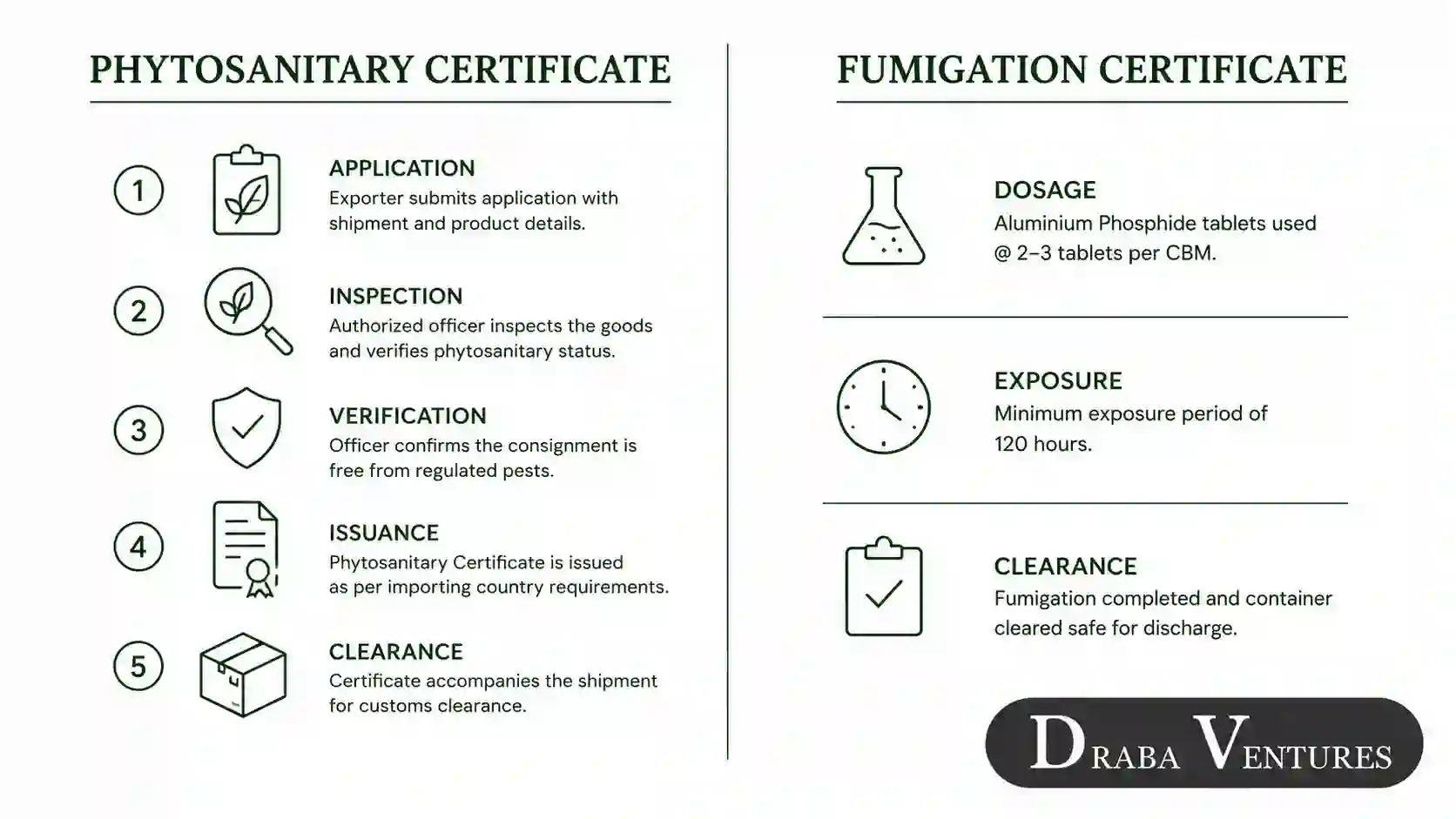
What a Phytosanitary Certificate Confirms
A Phytosanitary Certificate is an official biosecurity document issued by the exporting nation's agricultural authority. Under the International Plant Protection Convention (IPPC) guidelines, this certificate provides legal verification that the sorghum shipment has been officially inspected, found free from quarantine pests, and conforms to the importing country's sanitary and phytosanitary (SPS) regulations.
For Indian sorghum exports, this certificate is issued by the Directorate of Plant Protection, Quarantine & Storage (DPPQS). It confirms that the lot has been inspected via representative sampling and meets the phytosanitary import requirements of the destination port, serving as a vital clearance document for customs authorities worldwide.
When Fumigation Is Required
Fumigation is a mandatory chemical treatment applied to agricultural commodities to eliminate insects, weevils, and other grain-borne pests. Because sorghum is susceptible to stored-grain pests like the rice weevil (Sitophilus oryzae) and red flour beetle (Tribolium castaneum), international plant quarantine rules mandate fumigation prior to export.
Fumigation must be performed by a licensed agency approved by the government. The treatment typically utilizes Methyl Bromide (for rapid, low-temperature sterilization) or Aluminium Phosphide (phosphine, which requires a longer exposure period of 5 to 7 days). A formal Fumigation Certificate detailing the chemical type, dosage, duration, and temperature must be generated and signed by the fumigator.
NPPO Inspection Process in India
In India, the National Plant Protection Organization (NPPO) oversees the export inspection process through DPPQS regional offices at major sea ports and inland container depots (ICDs). Before shipping, the exporter must submit an application along with treatment certificates, packing lists, and export invoices.
A plant quarantine officer conducts a physical inspection of the cargo, drawing representative samples from the sorghum bags. The samples are analyzed in a quarantine laboratory to detect pests, weed seeds, or fungal pathogens. If the shipment passes laboratory clearance and all treatment verifications are in order, the NPPO issues the official Phytosanitary Certificate.
Certificate Fields Buyers Must Verify
Importers and their customs brokers must carefully audit the draft Phytosanitary Certificate before the original document is finalized. Essential fields to check include: the botanical name of the crop (Sorghum bicolor), the declared point of entry, the name and address of the exporter and consignee, and the container and seal numbers.
Additionally, the "Disinfestation and/or Disinfection Treatment" section must perfectly list the date of treatment, the chemical used (e.g., Aluminium Phosphide), the dosage applied (typically 3g per cubic meter), and the exposure temperature. Mismatches in any of these fields can cause customs delays.
Destination-Country Document Matching
Biosecurity agencies at destination ports are extremely strict about documentation consistency. The details on the Phytosanitary Certificate must match the Fumigation Certificate, the commercial invoice, the packing list, and the ocean Bill of Lading. Mismatches in container or seal numbers are the most common triggers for cargo holds.
For markets with strict environmental standards, such as the European Union or the United States, importers should ensure additional declarations are explicitly typed on the certificate. For example, some ports require a statement confirming that the sorghum is free from specific regional weeds or toxic ergot fungi.
Common Causes of Document Rejection
Understanding why phytosanitary documents are rejected is the best way to prevent logistics delays. Common triggers include issuing the certificate after the vessel's sail date (the inspection must occur prior to or during loading), missing official signatures or government stamps, or using illegible hand-written corrections on the form.
Another frequent issue is applying incorrect chemical dosages that do not meet destination import standards (e.g., using Methyl Bromide for a country that restricts its import due to ozone depletion regulations). Exporters must work closely with experienced phytosanitary clearing agents to guarantee that all certificate versions are fully compliant before dispatch.
Buyer Reference Table
| Operational item | Buyer question | Risk if ignored |
|---|---|---|
| Container plan | What is the bag count and net MT? | Overweight correction or short loading |
| Document cut-off | When must final docs be ready? | Missed vessel connection |
| Free days | How many days at destination? | Demurrage and detention cost |
| Cargo protection | What liner or desiccant plan is used? | Mold, condensation or claims |
Procurement Checklist Before You Ask for PI
- Confirm whether the cargo is white, yellow, red or feed-grade sorghum.
- State the end use: brewery, poultry feed, food processing, starch, distribution or industrial use.
- Ask for moisture, broken percentage, foreign matter, admixture and infestation status in writing.
- Confirm bag size, bag type, marking, container payload and shipment month.
- Request the expected document set before payment terms are finalized.
- Verify HS code, destination rules and importer obligations with your customs broker.
Always confirm grade, packing, shipment month and document requirements in writing before requesting a Proforma Invoice. Draba Ventures responds to structured RFQs with a detailed FOB or CIF quote within 24 hours.
Internal Authority Links
Frequently Asked Questions
What is the main buying decision in Phytosanitary and Fumigation Rules for Sorghum Export?
What should an importer include in a sorghum RFQ?
Which HS code should buyers use for sorghum imports?
Can Draba Ventures quote FOB and CIF sorghum shipments?
How does this page avoid keyword cannibalization?
Request a Sorghum Export Quote from Draba Ventures
Send product grade, quantity in MT, destination port, preferred Incoterm, payment preference and target shipment window. Our team will respond with a structured FOB or CIF quote.
Request a QuoteHS code note: this page uses 10070090 as the working sorghum trade entity. Final classification should be checked with the buyer's customs broker before import filing.
