How Importers Reduce Demurrage on Grain Containers is written for shipment planners, operations managers, port handlers and commodity importers. It answers one procurement question: how a buyer should evaluate grain container demurrage management without mixing the topic with unrelated sorghum logistics, pricing, compliance or end-use pages.
For importers, reduce demurrage grain containers should be evaluated through written specifications, lot-specific evidence, document consistency and the supplier's ability to execute the shipment under the agreed Incoterm.
Ready to Import Indian Sorghum?
Get an instant FOB and CIF cost estimate including shipping and insurance.
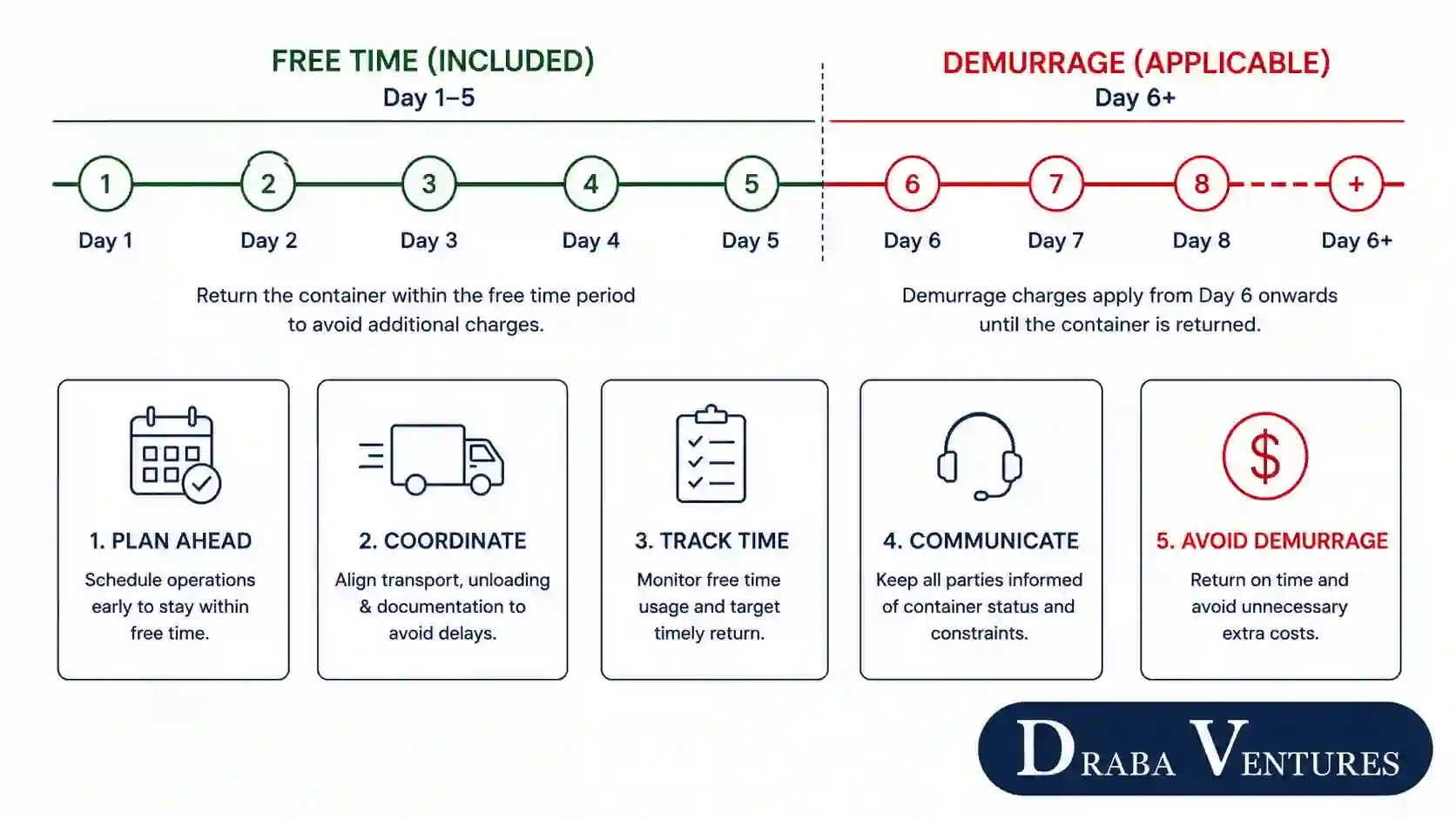
Demurrage vs Detention for Grain Importers
In international agricultural shipping, understanding the distinction between demurrage and detention is critical for keeping import costs under control. Demurrage represents the fee charged by shipping lines when loaded cargo containers remain inside the port terminal boundary beyond the allotted free-time window. This charge acts as a penalty for taking up port space and holding back the flow of inbound logistics.
Detention, on the other hand, begins after the container is cleared and hauled out of the port gates. It is a daily charge levied for retaining the empty container chassis or box past the allowed return limit, usually because of unloading or warehousing bottlenecks. For bulk grain shipments, demurrage typically incurs higher daily rates compared to detention, making prompt terminal evacuation the top priority.
Why Grain Containers Incur Avoidable Charges
Agricultural commodities are prone to clearance delays because they require dynamic quarantine verifications and physical biosecurity checks. Common triggers for demurrage include late dispatch of original bills of lading, delayed customs entry filings, and misaligned delivery schedules. If the vessel arrives before the buyer receives the physical documents, the port will hold the containers, triggering immediate fees.
Additionally, physical bottlenecks at unloading bays or scarcity of specialized bulk trucks can stall the return of empty equipment. In emerging markets, road weight regulations or seasonal congestion at inland container depots (ICDs) frequently prolong container transit, turning an otherwise profitable grain contract into a loss due to accumulated detention costs.
Document Readiness Checklist
Eliminating delays starts with an organized documentary flow. Importers must confirm that the seller's export office submits all draft paperwork for review prior to the vessel sailing. Key documents in this pipeline include the ocean Bill of Lading (OBL), commercial invoice, detailed packing list, Phytosanitary Certificate, and Fumigation Certificate. Any discrepancy in grain weight or container numbers will result in customs rejection.
A proactive document audit ensures that the HS code (such as 10070090 for sorghum exports) matches destination guidelines exactly. Furthermore, ensuring that certificates of origin and analysis certificates (covering parameters like moisture and aflatoxin limits) are formatted correctly avoids secondary inspections and keeps the clearance process moving without terminal disruptions.
Free-Days Negotiation Points
Standard carrier contracts usually offer only 5 to 7 calendar days of destination free-time. For grain importers handling large-volume agricultural contracts, this window is insufficient. Importers must explicitly negotiate for extended destination free-time (ideally 14 to 21 combined demurrage/detention days) during the initial booking stage at the origin port.
Carriers are more likely to grant these concessions when shipping volume is consistent, or if the shipper requests "merchant haulage" which permits greater flexibility. Securing these extended terms provides a crucial buffer to manage unexpected customs clearance delays, port congestion, or severe terminal weather halts.
Broker and Transporter Coordination
A seamless port-to-warehouse flow requires strict coordination between the customs broker, the port haulage contractor, and the warehouse receiving team. The broker should file a pre-arrival customs entry as soon as the manifest is registered by the carrier. This permits duty payment and biosecurity clearances to be processed before the vessel anchors.
Similarly, the transporter must be scheduled with precise pickup slots. Warehouse facilities should be staffed and equipped to handle swift destuffing and bag stacking of the grain, ensuring that empty containers can be returned to the designated carrier depot well before the free-time clock runs out.
Pre-Arrival Action Timeline
An effective mitigation strategy requires a structured operational timeline. Five days before vessel arrival, the importer should secure copies of all original shipping documents and initiate pre-clearance with local customs. Two days before arrival, the cargo dispatch instructions should be finalized and sent to the transport team, and the delivery slot at the warehouse must be locked in.
Upon vessel arrival (Day 0), the broker should secure immediate customs release and pay port charges. The transport team must hook and pull the container on Day 1, transit to the destination warehouse for immediate destuffing on Day 2, and return the empty container to the carrier's port depot on Day 3, completing the cycle with a safe safety margin.
Buyer Reference Table
| Operational item | Buyer question | Risk if ignored |
|---|---|---|
| Container plan | What is the bag count and net MT? | Overweight correction or short loading |
| Document cut-off | When must final docs be ready? | Missed vessel connection |
| Free days | How many days at destination? | Demurrage and detention cost |
| Cargo protection | What liner or desiccant plan is used? | Mold, condensation or claims |
Procurement Checklist Before You Ask for PI
- Confirm whether the cargo is white, yellow, red or feed-grade sorghum.
- State the end use: brewery, poultry feed, food processing, starch, distribution or industrial use.
- Ask for moisture, broken percentage, foreign matter, admixture and infestation status in writing.
- Confirm bag size, bag type, marking, container payload and shipment month.
- Request the expected document set before payment terms are finalized.
- Verify HS code, destination rules and importer obligations with your customs broker.
Do not repeat semantic entities already owned by other sorghum cluster pages. This page answers detention and free days; deeper connected topics should be followed through the internal links below.
Internal Authority Links
Frequently Asked Questions
What is the main buying decision in How Importers Reduce Demurrage on Grain Containers?
What should an importer include in a sorghum RFQ?
Which HS code should buyers use for sorghum imports?
Can Draba Ventures quote FOB and CIF sorghum shipments?
How does this page avoid keyword cannibalization?
Request a Sorghum Export Quote from Draba Ventures
Send product grade, quantity in MT, destination port, preferred Incoterm, payment preference and target shipment window. Our team will respond with a structured FOB or CIF quote.
Request a QuoteHS code note: this page uses 10070090 as the working sorghum trade entity. Final classification should be checked with the buyer's customs broker before import filing.
