Sorghum is increasingly used by poultry feed manufacturers as a cost-competitive alternative to maize - particularly during periods of high corn prices or supply disruption. But sorghum formulation requires careful attention to tannin content, digestibility values and moisture specifications that differ from corn. This guide gives feed nutrition teams and procurement managers the key parameters to specify when sourcing Indian sorghum for poultry feed, and what to watch for in the quality certificate.
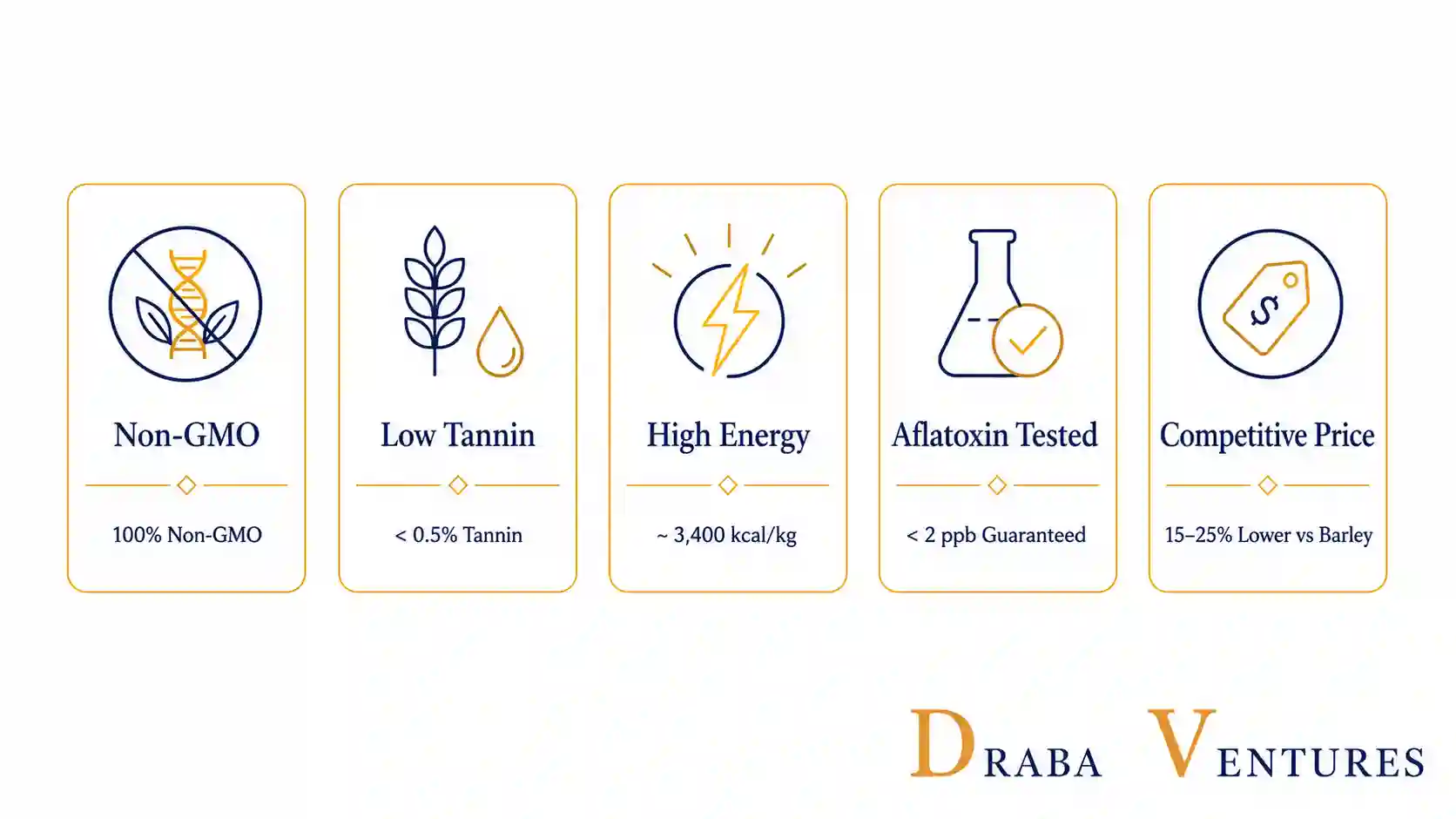
Indian sorghum for poultry feed: specify low-tannin white or yellow grade (tannin ≤0.3-0.5%), moisture ≤13.5%, broken ≤5%, foreign matter ≤1.5%. Metabolisable energy value typically 3,200-3,300 kcal/kg (vs maize at 3,300-3,400 kcal/kg). Adjust formulation by 3-5% to compensate for lower energy density. Require a moisture certificate and tannin test report - not just a certificate of analysis.
Ready to Import Indian Sorghum?
Get an instant FOB and CIF cost estimate including shipping and insurance.
Why Feed Manufacturers Use Sorghum
Sorghum (commonly known as jowar in India) has emerged as a major cost-effective and nutritionally viable alternative carbohydrate source to yellow maize in commercial poultry feed manufacturing. As industrial starch and bioethanol demand drives up corn prices, feed mill operators rely on sorghum to manage feed cost per ton.
Sorghum fits seamlessly into broiler and layer feed milling systems. Using feed-grade sorghum allows integrated poultry producers to stabilize their feed formulation margins without compromising feed conversion ratios (FCR).
Energy and Protein Contribution
From a nutritional standpoint, sorghum is an excellent energy source, delivering a metabolisable energy (ME) value of approximately 3,200 to 3,300 kcal/kg, which is almost 95% of the energy value of yellow corn. This high energy concentration is supported by its starch structure, which consists of amylose and amylopectin.
Furthermore, sorghum contains a higher crude protein content (ranging from 9% to 11%) compared to corn (typically 8.5%). It is rich in essential amino acids like leucine, glutamic acid, and aspartic acid, reducing the reliance on synthetic protein supplements.
Maize Substitution in Feed Mills
In broiler diets, nutritionists can substitute yellow corn with low-tannin white sorghum at levels up to 50% in starter diets and up to 100% in grower and finisher rations without any adverse effects on feed intake or carcass yield. Modern white sorghum cultivars are carefully selected to ensure tannin levels remain low.
For laying hens, feed mills can substitute corn with white sorghum, though they must monitor yolk pigmentation. Because sorghum lacks the xanthophyll pigments found in yellow corn, nutritionists add natural pigments (like marigold or alfalfa extract) to maintain yolk color.
Grinding and Pelletizing Behavior
Sorghum's physical characteristics require specific handling in feed mills. Because sorghum kernels are smaller and harder than corn kernels, hammer mill screen sizes and roll settings must be calibrated. Achieving a particle size of 600 to 800 microns is critical to maximize nutrient digestibility.
During the pelleting process, sorghum starch gelatinizes at slightly higher steam conditioning temperatures (around 80°C to 85°C). Properly gelatinized starch acts as a natural binder, increasing pellet durability and minimizing fines in the feed trough.
Feed-Grade Procurement Specifications
Buyers sourcing feed-grade sorghum from India should establish strict quality standards to prevent mold or toxin risks in feed silos. Key export parameters include a maximum moisture content of 12% to 14%, a minimum crude protein level of 9%, and maximum foreign matter (admixture) of 1.5%.
More importantly, the tannin content must be verified below 0.3% to avoid anti-nutritional issues. Sourcing agencies must secure certifications showing aflatoxin levels below 20 ppb (or lower, depending on destination import laws) and confirm the cargo is free from live insect infestation.
Repeat Supply for Integrated Poultry Buyers
For large-scale integrated poultry corporations, spot market procurement is not enough to support continuous mill operations. To ensure a steady supply chain, buyers enter into bulk supply contracts with APEDA-certified Indian exporters who can source from primary sorghum growing belts.
Sourcing programs are structured to deliver a regular flow of 20ft containers (holding 20 to 24 MT each) on weekly or monthly schedules. This constant supply ensures feed mills run smoothly and avoids the risk of sudden feed formulation changes.
Buyer Reference Table
| Application factor | Buyer question | Procurement evidence |
|---|---|---|
| End use | Feed, brewery, food or starch? | RFQ and specification |
| Processing fit | Will the grain perform in plant? | Sample test |
| Repeatability | Can the supplier repeat the profile? | Contract and sample retention |
| Quality release | Who approves before loading? | Inspection report |
Procurement Checklist Before You Ask for PI
- Confirm whether the cargo is white, yellow, red or feed-grade sorghum.
- State the end use: brewery, poultry feed, food processing, starch, distribution or industrial use.
- Ask for moisture, broken percentage, foreign matter, admixture and infestation status in writing.
- Confirm bag size, bag type, marking, container payload and shipment month.
- Request the expected document set before payment terms are finalized.
- Verify HS code, destination rules and importer obligations with your customs broker.
Always confirm grade, packing, shipment month and document requirements in writing before requesting a Proforma Invoice. Draba Ventures responds to structured RFQs with a detailed FOB or CIF quote within 24 hours.
Internal Authority Links
Frequently Asked Questions
What is the main buying decision in Sorghum for Poultry Feed Manufacturers?
What should an importer include in a sorghum RFQ?
Which HS code should buyers use for sorghum imports?
Can Draba Ventures quote FOB and CIF sorghum shipments?
How does this page avoid keyword cannibalization?
Request a Sorghum Export Quote from Draba Ventures
Send product grade, quantity in MT, destination port, preferred Incoterm, payment preference and target shipment window. Our team will respond with a structured FOB or CIF quote.
Request a QuoteHS code note: this page uses 10070090 as the working sorghum trade entity. Final classification should be checked with the buyer's customs broker before import filing.
