Sorghum starch is an emerging feedstock for industrial applications including bioplastics, textile sizing, paper manufacturing and fermentation. Indian white sorghum has a starch content of 68-72%, comparable to maize starch at 70-75%, making it a viable and often cheaper alternative for industrial starch extraction. This guide explains what starch buyers need to specify when sourcing Indian sorghum for industrial processing, and how to verify starch yield potential before committing to a large order.
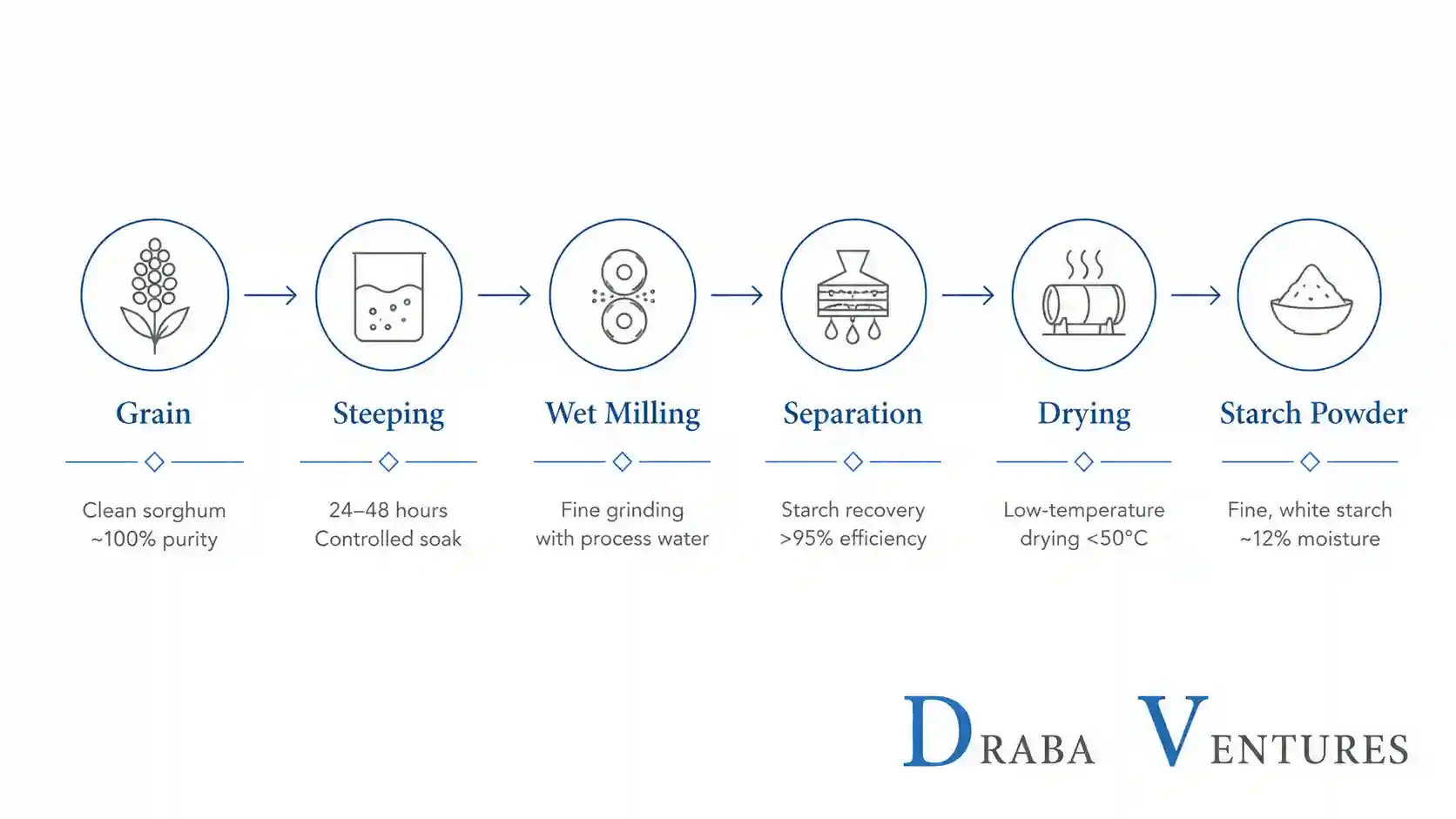
Indian sorghum for industrial starch: starch content 68-72% (white food-grade); protein 8-10%; fat 3-4%. Wet milling yield typically 60-65% pure starch from 100 kg grain input. Specify moisture ≤12.5%, broken ≤3%, foreign matter ≤1% - excess broken grain increases processing losses and reduces extraction efficiency.
Ready to Import Indian Sorghum?
Get an instant FOB and CIF cost estimate including shipping and insurance.
Why Starch Plants Evaluate Sorghum
Industrial buyers should connect grain specification to plant performance. The correct sorghum lot is the one that fits the process: milling, ration formulation, starch conversion, flour production, fermentation or feed manufacturing. That is why end use must be stated in the RFQ.
Industrial starch users should test the grain against plant yield and process behavior. The purchase decision should connect specification to extraction performance.
Starch Content and Grain Consistency
Industrial buyers should connect grain specification to plant performance. The correct sorghum lot is the one that fits the process: milling, ration formulation, starch conversion, flour production, fermentation or feed manufacturing. That is why end use must be stated in the RFQ.
Industrial starch users should test the grain against plant yield and process behavior. The purchase decision should connect specification to extraction performance.
Milling and Slurry Preparation
For importers, the commercial question is not simply whether sorghum is available. The useful question is whether the exporter can assemble a repeatable lot with the same grain profile, cleaning level, bagging format and document set across multiple shipments. That is where professional sourcing separates from casual commodity trading.
Industrial starch users should test the grain against plant yield and process behavior. The purchase decision should connect specification to extraction performance.
Separation and Drying Considerations
For importers, the commercial question is not simply whether sorghum is available. The useful question is whether the exporter can assemble a repeatable lot with the same grain profile, cleaning level, bagging format and document set across multiple shipments. That is where professional sourcing separates from casual commodity trading.
The document file should match the purchase order line by line. Commodity name, HS code, bag count, gross weight, net weight, container number, seal number, consignee details and certificate references must remain consistent across invoice, packing list, bill of lading and inspection certificates.
Industrial Buyer Specification Logic
A useful quote separates commodity value from service scope. Buyers should ask whether the price includes cleaning, bagging, inland movement, documentation, loading charges, inspection support and quote validity. Without that breakdown, the lowest number may not be the lowest landed risk.
Industrial starch users should test the grain against plant yield and process behavior. The purchase decision should connect specification to extraction performance.
How to Approve a Supply Lot
For importers, the commercial question is not simply whether sorghum is available. The useful question is whether the exporter can assemble a repeatable lot with the same grain profile, cleaning level, bagging format and document set across multiple shipments. That is where professional sourcing separates from casual commodity trading.
The document file should match the purchase order line by line. Commodity name, HS code, bag count, gross weight, net weight, container number, seal number, consignee details and certificate references must remain consistent across invoice, packing list, bill of lading and inspection certificates.
Buyer Reference Table
| Application factor | Buyer question | Procurement evidence |
|---|---|---|
| End use | Feed, brewery, food or starch? | RFQ and specification |
| Processing fit | Will the grain perform in plant? | Sample test |
| Repeatability | Can the supplier repeat the profile? | Contract and sample retention |
| Quality release | Who approves before loading? | Inspection report |
Procurement Checklist Before You Ask for PI
- Confirm whether the cargo is white, yellow, red or feed-grade sorghum.
- State the end use: brewery, poultry feed, food processing, starch, distribution or industrial use.
- Ask for moisture, broken percentage, foreign matter, admixture and infestation status in writing.
- Confirm bag size, bag type, marking, container payload and shipment month.
- Request the expected document set before payment terms are finalized.
- Verify HS code, destination rules and importer obligations with your customs broker.
Always confirm grade, packing, shipment month and document requirements in writing before requesting a Proforma Invoice. Draba Ventures responds to structured RFQs with a detailed FOB or CIF quote within 24 hours.
Internal Authority Links
Frequently Asked Questions
What is the main buying decision in Sorghum for Industrial Starch Production?
What should an importer include in a sorghum RFQ?
Which HS code should buyers use for sorghum imports?
Can Draba Ventures quote FOB and CIF sorghum shipments?
How does this page avoid keyword cannibalization?
Request a Sorghum Export Quote from Draba Ventures
Send product grade, quantity in MT, destination port, preferred Incoterm, payment preference and target shipment window. Our team will respond with a structured FOB or CIF quote.
Request a QuoteHS code note: this page uses 10070090 as the working sorghum trade entity. Final classification should be checked with the buyer's customs broker before import filing.
