Maximizing container payload to 26 Metric Tons (520 bags of 50kg) inside standard 20-foot shipping containers reduces ocean freight expense by $12 to $18 per metric ton compared to conventional 21 MT loads. Draba Ventures locks in competitive CIF pricing directly from Indian gateway ports (Nhava Sheva, Mundra, Kakinada) to major West African terminals (Dakar, Abidjan, Cotonou) while enforcing mandatory gas-tight phosphine fumigation and accredited NPPO phytosanitary protocols to ensure cargo arrives zero-weevil compliant.
The 20-Foot Heavy Container Advantage
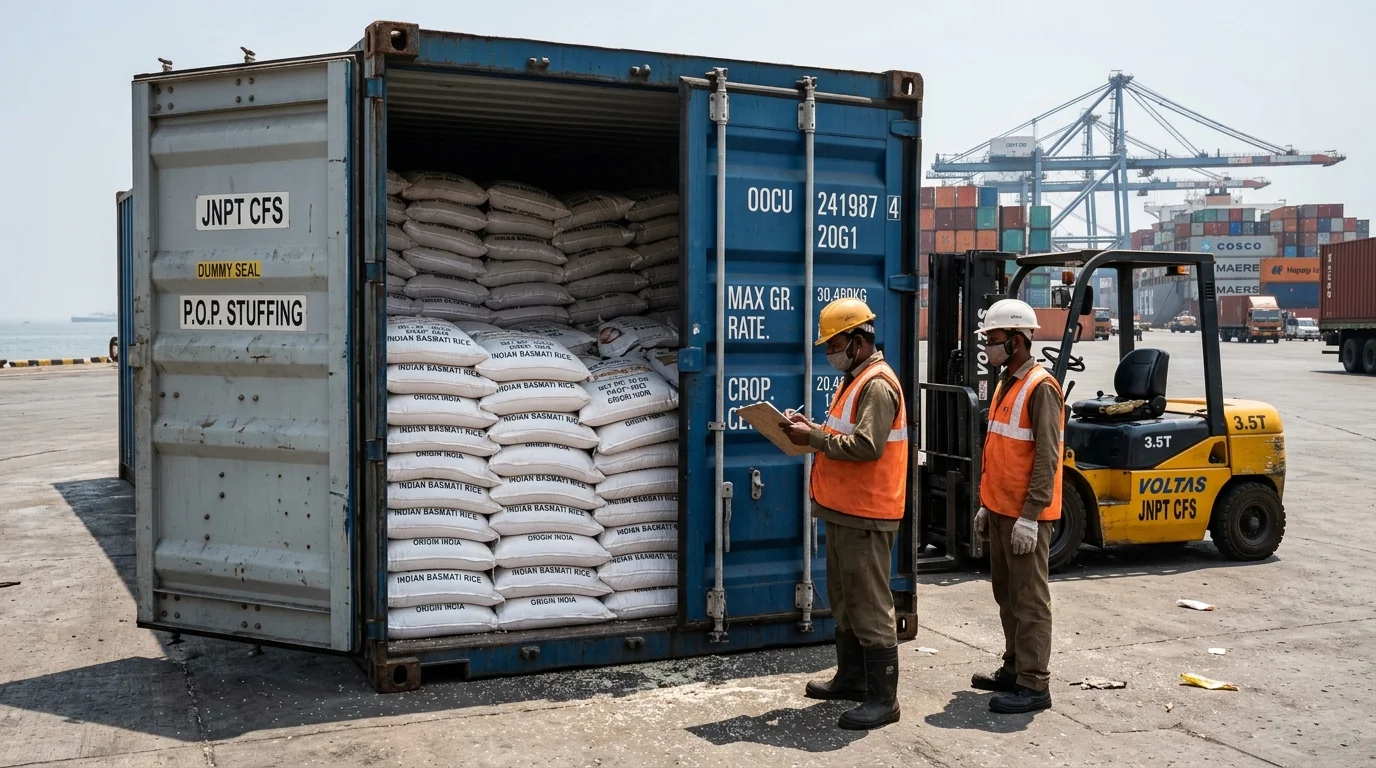
In international agricultural shipping, cargo profitability is governed by the fundamental distinction between volume-constrained goods and weight-constrained goods. Milled parboiled rice is a high-density bulk commodity with a specific stowage factor of roughly 1.4 to 1.5 cubic meters per metric ton. Because of this high mass density, rice shipments are universally constrained by legal gross vehicle weight (GVW) limits rather than volumetric cubic capacity.
Under international maritime standards (ISO 668) and statutory road hauling regulations, the maximum gross weight (tare container plus cargo payload) for a standard shipping unit is capped at 30,480 kg (67,200 lbs). If an importer attempts to ship bulk rice in a 40-foot container (which has an internal volume of 67.7 m³), the container hits its legal road and crane weight ceiling after loading only 26 to 27 metric tons of rice. This leaves more than 40% of the 40-foot box empty. Because shipping lines charge significantly higher ocean freight rates for 40-foot units, shipping rice in 40ft boxes results in exorbitant dead freight costs.
Consequently, institutional rice trade between India and West Africa is conducted exclusively in 20-foot Full Container Loads (FCL). However, not all 20-foot container loadings are equal. Many conventional exporters load only 20 to 21 metric tons (400 to 420 bags of 50kg) per container due to basic inland hauling restrictions or conservative manual stuffing practices. Draba Ventures structures operations around heavy 26 MT FCL container stuffing, packing exactly 520 bags of 50kg (or 1,040 bags of 25kg) into every single 20-foot box.
Below is an institutional engineering comparison of the unit economics between standard and heavy container stuffing:
| Logistics Parameter | Standard FCL Loading | Draba Ventures Heavy FCL | Importer Economic Benefit |
|---|---|---|---|
| Net Cargo Payload | 21.0 Metric Tons | 26.0 Metric Tons | +5.0 MT (+23.8% cargo volume per box) |
| Export Bag Count (50kg) | 420 Bags | 520 Bags | +100 Bags per container |
| Container Tare Weight | ~2,250 kg | ~2,250 kg | Identical tare weight |
| Total Gross Cargo Weight | 23,250 kg | 28,250 kg | Well within 30,480 kg ISO safety rating |
| Illustrative Ocean Freight / Box | $1,850 per 20ft box | $1,850 per 20ft box | Carrier charges flat box rate per 20ft unit |
| Effective Ocean Freight / MT | $88.10 per MT | $71.15 per MT | $16.95 / MT Direct Savings |
| Landed Savings on 500 MT Order | Baseline (24 Containers) | Optimized (19.2 Containers) | $8,475 Total Landed Freight Reduction |
By loading 26 MT per box, the buyer amortizes fixed ocean freight, bill of lading (B/L) documentation charges, and destination port agency clearance fees over 23.8% more grain. Over a 500 MT commercial contract, this logistics optimization saves several thousand dollars, directly expanding the distributor wholesale margin in competitive retail centers.
CIF Pricing to Major Francophone Ports
For commercial rice importers across Francophone West Africa, purchasing on CIF (Cost, Insurance, and Freight, Incoterms 2020) terms represents the lowest-risk commercial structure. Under CIF contracts, Draba Ventures assumes full financial and operational responsibility for cargo transport from the Indian processing mill until the containerized vessel arrives at the buyer designated maritime discharge terminal.
The institutional formula for our CIF quotations is built on three core pillars:
- Cost (FOB Indian Port Base): Clean grain procurement, precision parboiling, optical Sortex grading (5% or 25% broken), high-tensile 50kg bag conversion, state APEDA export inspection, and Indian port terminal handling charges (THC).
- Freight (Ocean Transit): Contracted container slot allocation with top global shipping lines (such as MSC, Maersk, CMA CGM, and Hapag-Lloyd) locking in direct or single-transshipment sea lanes from primary Indian export ports (Nhava Sheva / JNPT, Mundra, Kandla, and Kakinada).
- Insurance (Marine All-Risks Policy): Marine insurance underwritten to Institute Cargo Clauses (A), covering 110% of the total CIF invoice value against marine perils, jettison, container sweat, water ingress, and total vessel loss from port of loading to port of discharge.
Draba Ventures provides fixed CIF contracting to all major container gateways across the West African coastline:
- Port Autonome de Dakar (PAD, Senegal): Average ocean transit of 24 to 28 days from West Coast India (Nhava Sheva/Mundra). Dakar acts as the primary culinary corridor for 100% broken and 25% broken parboiled rice, serving domestic consumption and transit rail corridors into Bamako, Mali.
- Port Autonome d'Abidjan (PAA, Côte d'Ivoire): Average ocean transit of 28 to 32 days. Abidjan features deep-water container terminal facilities capable of rapid berth turnaround, feeding urban wholesale markets in Treichville and Adjamé, as well as northern road transit into Burkina Faso.
- Port Autonome de Cotonou (PAC, Benin): Average ocean transit of 30 to 35 days. Cotonou represents a vital trading nexus for commercial rice distribution across southern Benin and cross-border commercial trade corridors into western Nigeria.
- Port Autonome de Lomé (PAL, Togo): Average ocean transit of 29 to 33 days. Lomé deep-water hub provides swift customs clearance and transshipment access for Togo, Niger, and the broader UEMOA economic zone.
Merchant Export Agility and Port Proximity
A recurring bottleneck in agricultural commodity trade is the logistical rigidity of traditional single-facility rice mills located deep in inland India (such as Chhattisgarh, Punjab, or eastern Uttar Pradesh). Inland mills rely on domestic railway wagons (rakes) and inland container depots (ICDs). When rail wagons are delayed or railway freight tariffs spike, inland mills face 2-to-3-week transport delays, missing vessel cutoff dates and causing buyers to lose maritime booking rates.
Draba Ventures operates an agile merchant export model that decouples grain cultivation from coastal maritime staging:
- Dynamic Multi-Mill Sourcing: We contract modern Sortex milling capacity across the Tungabhadra agricultural basin in Karnataka, Andhra Pradesh, and coastal Gujarat, ensuring continuous raw material availability without single-facility downtime.
- Port-Proximate CFS Staging: Bulk polished rice is moved swiftly by dedicated road transport to vetted Container Freight Stations (CFS) situated within 15 to 25 kilometers of outbound port gates at Nhava Sheva (JNPT), Mundra, and Kakinada.
- Immediate Vessel Gate-In Agility: Because stuffing occurs adjacent to the maritime terminal, our logistics coordinators monitor real-time vessel gate-openings. Containers are stuffed, sealed, and gated into the port within 24 to 48 hours of vessel berthing, completely eliminating costly inland detention charges and roll-over risks.
Mandatory Fumigation and Phytosanitary Security
Non-basmati parboiled rice shipped across the equatorial Indian Ocean and South Atlantic encounters extreme tropical temperature fluctuations. Day-to-night temperature swings inside unventilated steel containers generate atmospheric condensation, commonly known as container sweat. Under high humidity and ambient temperatures exceeding 30 degrees Celsius, dormant insect eggs (particularly the rice weevil, Sitophilus oryzae) can hatch during a 30-day ocean voyage if pre-shipment fumigation is compromised.
Customs and quarantine authorities across West Africa (including DPVE in Senegal and DPVCQ in Côte d'Ivoire) enforce strict zero-tolerance policies on live insects. A single container arriving with live pest activity is subject to mandatory port re-fumigation, demurrage penalties, or cargo re-export orders.
The Draba Ventures Zero-Pest Phytosanitary Protocol
To ensure 100% biosecurity compliance and zero destination rejections, every export container follows our validated pre-shipment quarantine protocol:
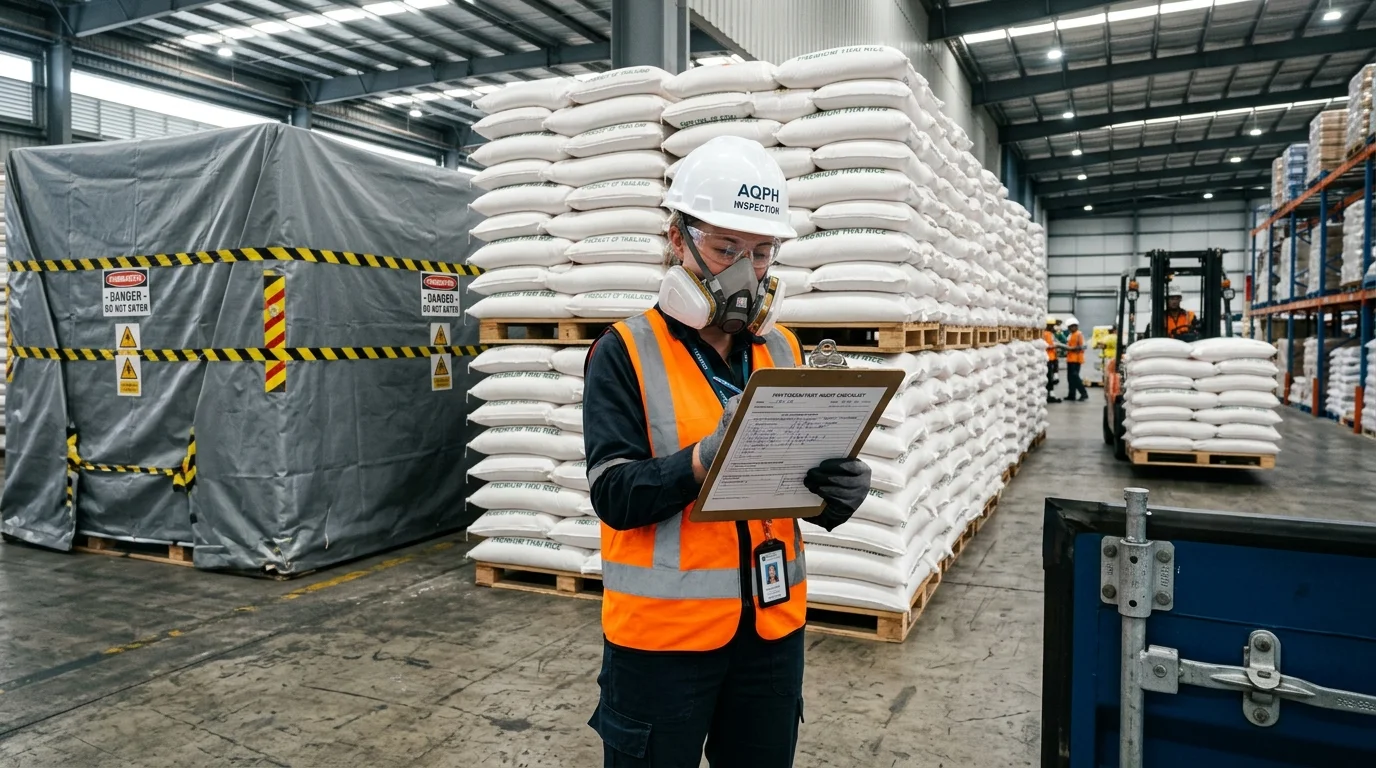
- Gas-Tight Sheeting Fumigation: Palletized or bagged rice stacks are sealed under specialized multi-layer PVC gas-retention tarpaulins. Aluminum Phosphide (ALP) is dosed at a concentration of 3.0 grams of phosphine gas per cubic meter. The stacks remain under hermetic seal for a minimum exposure period of 120 to 168 hours to eradicate all life stages (eggs, larvae, pupae, and adults).
- Methyl Bromide (MBr) Capability: When mandated by specific destination import permits or national plant quarantine directives, fumigation is executed using certified Methyl Bromide gas under licensed entomologist supervision.
- Government Phytosanitary Certification: Every consignment undergoes mandatory field sampling and laboratory verification by the National Plant Protection Organization (NPPO) and Directorate of Plant Protection, Quarantine and Storage (DPPQS) under the Ministry of Agriculture, Government of India, issuing official Phytosanitary Certificates before vessel sailing.
- Container Sweat Mitigation: Clean, dry containers are swept, inspected for light leaks or floor odors, lined on the floor and walls with high-grade corrugated kraft paper, and fitted with 1,000-gram calcium chloride hanging desiccant bags capable of absorbing up to 200% of their weight in moisture.
Frequently Asked Questions
Lock In Your 26 MT FCL CIF Contract Today
Consult with our international commodity trade desk to structure 26 MT heavy container logistics, review current ocean freight rates to Dakar, Abidjan, or Cotonou, and request formal CIF proforma pricing.
Request 26 MT FCL Quotation