Aflatoxin contamination is the leading cause of Indian sorghum shipment rejection in EU ports and a growing compliance concern in Nigeria, Saudi Arabia and Southeast Asia. Unlike visual defects, aflatoxin is invisible, odourless and untestable without laboratory analysis. This guide explains where contamination enters the supply chain, what limits apply in each major import market, how to verify that an exporter's testing protocol is actually robust, and what paperwork protects you if a shipment fails at the destination.
Aflatoxin limits for sorghum imports: EU food use - Aflatoxin B1 ≤2 μg/kg, total ≤4 μg/kg. EU feed use - B1 ≤5 μg/kg. USA (FDA) - total ≤20 μg/kg. Nigeria (NAFDAC) - total ≤10 μg/kg for human food. Always require a lot-specific HPLC test report from an ISO 17025 accredited lab, not a generic company certificate.
Ready to Import Indian Sorghum?
Get an instant FOB and CIF cost estimate including shipping and insurance.
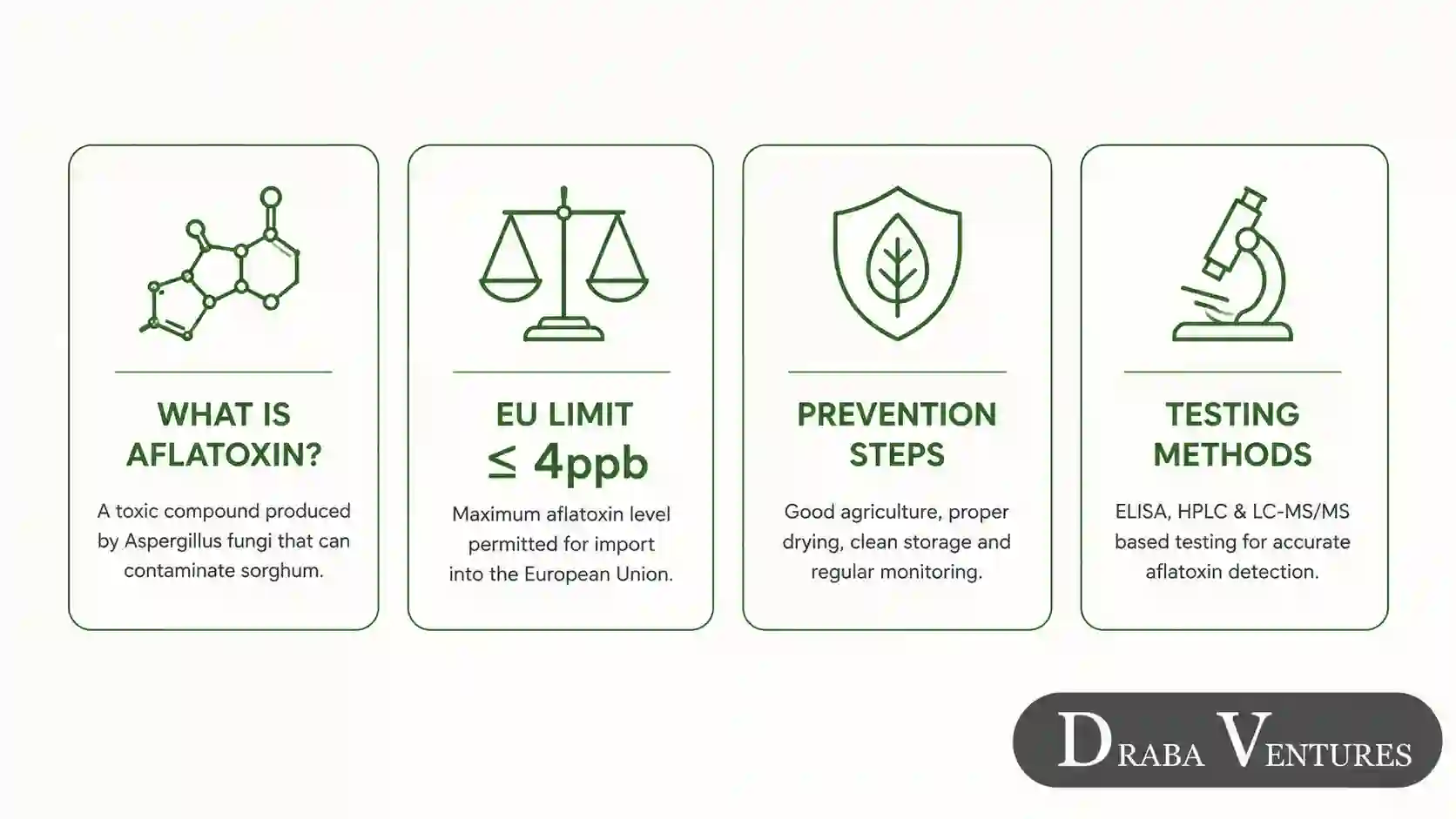
Why Aflatoxin Control Matters in Sorghum Trade
Aflatoxin contamination poses a critical food safety risk in international grain trade, potentially leading to shipment rejection at destination ports. Strict origin controls are necessary to guarantee that sorghum lots meet safety thresholds defined by importing countries.
Sorghum imports destined for human consumption or animal feed must comply with strict micro-biological guidelines. Buyers require transparent testing protocols to ensure that quality and compliance are verified before the vessel departs.
Where Risk Enters the Supply Chain
Mycotoxin development primarily occurs during crop maturation and is exacerbated by improper storage conditions. High humidity, delayed harvesting, and insect damage create breeding grounds for Aspergillus molds that produce aflatoxin.
Exporters must manage post-harvest operations closely, ensuring immediate threshing and moisture reduction. Sourcing from regions with certified dry agricultural practices is the first line of defense against mold contamination.
Moisture Screening and Storage Controls
Moisture content is the primary factor influencing mold growth during ocean transit. Grain drying processes must achieve uniform moisture levels below 14% to prevent moisture relocation and subsequent heating in containers.
Warehouse management plays a critical role, requiring well-ventilated structures, regular temperature monitoring, and batch-wise stack segregation to avoid cross-contamination of clean grain cargo.
Representative Sampling for Export Lots
Aflatoxin distribution within a bulk grain lot is highly heterogeneous, meaning simple spot testing can lead to inaccurate results. Representative sampling protocols must be strictly followed to obtain an accurate assessment.
Sampling should follow international standards, such as GAFTA or ISO guidelines, drawing incremental samples from throughout the lot. These composite samples are then homogenized and split for analysis.
Rapid Test vs Laboratory Confirmation
Exporters utilize rapid testing kits at aggregation points to screen incoming lots quickly before transport. These ELISA or lateral flow tests provide immediate results to flag high-risk batches prior to processing.
For final export clearance, official laboratory analysis is performed using high-performance liquid chromatography (HPLC). This certification provides quantitative evidence to satisfy customs and quarantine authorities.
Pre-Shipment Release Workflow
A structured quality release protocol ensures that only compliant grain is loaded into shipping containers. Sourcing units must coordinate with third-party surveyors to witness the final packing and sealing process.
Surveyors verify container condition, seal integrity, and lot numbers, linking the final lab certificate to the shipping document set. This traceable workflow minimizes destination customs delays and cargo clearance risks.
Buyer Reference Table
| Control point | Buyer requirement | Evidence to request | Risk reduced |
|---|---|---|---|
| Moisture screening | Lot kept within agreed moisture limit | Moisture meter log or lab report | Mold and toxin development |
| Composite sampling | Samples drawn from multiple bags | Sampling note or inspection report | False clean sample |
| Rapid screening | Fast pre-check before dispatch | ELISA or rapid kit record | Late-stage rejection |
| Lab confirmation | Shipment-specific result | ISO 17025 lab report where required | Border or buyer rejection |
Aflatoxin is not distributed evenly through a grain lot. That is why a handful sample from the top bag is not enough for serious export decisions.
Buyers should require the test report to identify the lot, date, method and unit of measurement. Old reports or reports from another lot should not be accepted.
Procurement Checklist Before You Ask for PI
- Confirm whether the cargo is white, yellow, red or feed-grade sorghum.
- State the end use: brewery, poultry feed, food processing, starch, distribution or industrial use.
- Ask for moisture, broken percentage, foreign matter, admixture and infestation status in writing.
- Confirm bag size, bag type, marking, container payload and shipment month.
- Request the expected document set before payment terms are finalized.
- Verify HS code, destination rules and importer obligations with your customs broker.
Aflatoxin is not distributed evenly through a grain lot - a single contaminated section can fail an entire shipment. Never accept a test report from a previous batch or a different lot as evidence for your consignment. Require a lot-specific certificate from an ISO 17025 accredited lab, issued on the actual cargo you are purchasing, before authorising payment or shipment.
Internal Authority Links
Frequently Asked Questions
What is the main buying decision in How Indian Sorghum Exporters Control Aflatoxin in Bulk Shipments?
What should an importer include in a sorghum RFQ?
Which HS code should buyers use for sorghum imports?
Can Draba Ventures quote FOB and CIF sorghum shipments?
How does this page avoid keyword cannibalization?
Request a Sorghum Export Quote from Draba Ventures
Send product grade, quantity in MT, destination port, preferred Incoterm, payment preference and target shipment window. Our team will respond with a structured FOB or CIF quote.
Request a QuoteHS code note: this page uses 10070090 as the working sorghum trade entity. Final classification should be checked with the buyer's customs broker before import filing.
