Transitioning from unbranded generic sacks to custom-branded 25kg and 50kg BOPP bags enables West African rice importers to capture an 8% to 15% wholesale price premium across urban retail hubs like Dakar, Abidjan, and Lomé. Draba Ventures executes end-to-end white-labeling through vetted contract manufacturing job-worker networks in India, providing multi-cylinder rotogravure printing, moisture-proof BOPP lamination, and mandatory pre-shipment SGS weight supervision to eliminate port-weighbridge penalties.
Building Local Brand Equity in West Africa
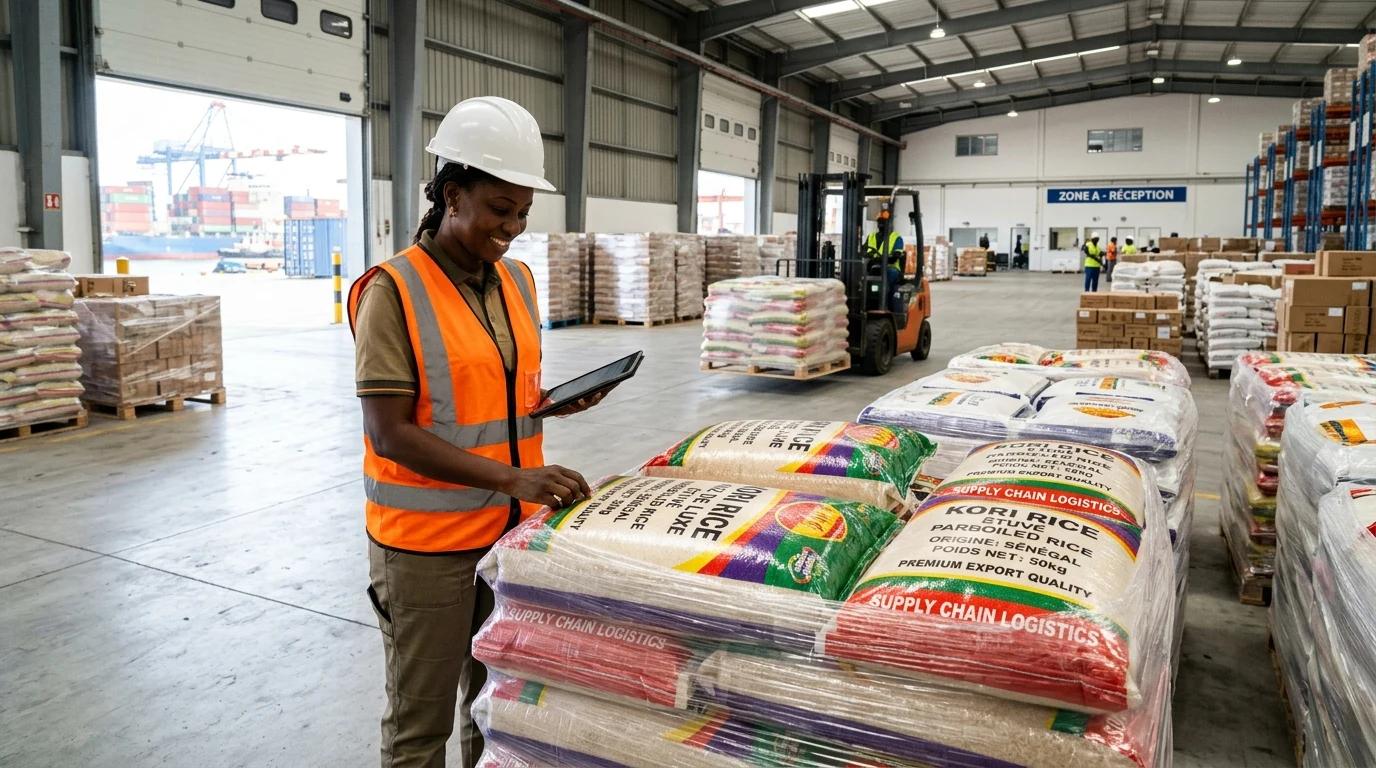
In highly competitive grain corridors such as Dakar (Senegal), Abidjan (Côte d'Ivoire), Lomé (Togo), and Cotonou (Benin), selling generic white-label Indian rice leaves commercial importers vulnerable to aggressive price wars. Commodity rice margins fluctuate rapidly based on global freight swings and export tariffs. However, importers who establish their own proprietary retail brands build long-term consumer equity, commanding steady distributor loyalty and retail price premiums.
Consumer purchasing habits in West Africa are brand-driven. Family cooks and wholesale market buyers recognize distinctive bag artwork, trusting specific bag designs for cooking consistency in regional staples like Thieboudienne and Jollof. When an importer owns the brand identity, local brand equity belongs entirely to them, rather than to an overseas milling conglomerate that can bypass them on future shipments.
Draba Ventures provides comprehensive white-labeling solutions tailored to the legal and commercial standards of West Africa:
- Bilingual Packaging Compliance: Strict incorporation of French and English legal markings, including statutory Net Weight statements (Poids Net: 25 kg / 50 kg), Crop Season, Milling Specifications (5% or 25% broken), and Importer Commercial Registration numbers.
- Barcode & Traceability Integration: Printing EAN-13 barcodes, batch identifiers, and milling plant codes for seamless retail scanner checkout in modern supermarket chains across Abidjan and Dakar.
- Trademark Protection: Safeguarding your proprietary brand assets by ensuring packaging print cylinders are dedicated exclusively to your firm under contractual exclusivity.
Contract Manufacturing and Unmatched Packaging Flexibility
Traditional rice export operations depend on captive packaging facilities inside single milling complexes. When large orders surge during the peak harvest season (October to March), these single-facility mills face severe operational bottlenecks. Their internal printing lines become congested, leading to 4-to-6-week packing delays that cause buyers to miss favorable maritime shipping windows.
Draba Ventures resolves this constraint by decoupling agricultural grain processing from specialized high-speed packaging conversion. We operate an agile contract manufacturing model, partnering with ISO-certified, APEDA-registered modern rice mills and dedicated packaging job-workers:
- Parallel Production Capacity: While high-capacity Sortex optical sorting lines polish and de-stone your IR 64 parboiled rice, specialized packaging conversion facilities manufacture and print up to 100,000 laminated sacks simultaneously.
- Rotogravure Cylinder Scalability: Our network of electronic cylinder engravers can engrave up to 8-color steel cylinders within 7 to 10 working days, dramatically accelerating time-to-market for new private label launches.
- Multi-Port Loading Agility: We align packaging job-working facilities near major Indian export gateways (Kakinada, Visakhapatnam, Chennai, and Mundra), enabling swift container stuffing and zero port demurrage costs.
This operational flexibility ensures that container stuffing schedules remain completely unaffected by packaging volume spikes, giving our wholesale buyers reliable execution on 250 MT to 5,000 MT shipments.
BOPP vs. PP Woven Sacks for Heavy Transit
Selecting the right packaging substrate is critical when shipping non-basmati parboiled rice across equatorial ocean routes. The cargo faces extended ocean voyages (25 to 35 days), high atmospheric humidity, and rigorous multi-stage handling by port stevedores using steel hooks.
The two dominant packaging formats in global rice commerce are standard Woven Polypropylene (PP) sacks and Biaxially Oriented Polypropylene (BOPP) laminated sacks. Below is an institutional engineering comparison:
| Technical Specification | Standard Woven PP Bag | BOPP Laminated Woven Bag |
|---|---|---|
| Base Material Structure | Woven Polypropylene tapes (circular weave) | Woven PP fabric + Extrusion PE layer + Reverse-printed BOPP film |
| Fabric Weight (GSM) | 65 to 75 GSM | 85 to 105 GSM (Heavy-duty composite) |
| Printing Technology | Flexographic printing (1 to 3 spot colors) | Rotogravure high-definition (up to 8 colors photographic CMYK) |
| Graphic Resolution | Basic vector lines & text (65 to 85 LPI) | Photographic detail & realistic imagery (150 to 175 LPI) |
| Tensile Burst Strength | 18 to 22 kg/cm² | 28 to 35 kg/cm² (Superior drop & stack durability) |
| Moisture Barrier Protection | Porous; requires separate loose PE liner | Hermetic film barrier protects grain from marine humidity |
| Resistance to Port Steel Hooks | Moderate; unlaminated weave tears easily | High puncture & tear resistance; prevents burst sacks |
| Best Commercial Use Case | Government tenders & budget wholesale bulk | Premium retail branding & competitive urban wholesale |
SGS Supervision and Exact Weight Tolerances
Customs administrations across West Africa (including the Autonomous Port of Dakar - PAD, Port of Abidjan - PAA, and Autonomous Port of Lomé - PAL) enforce strict cargo weight verification protocols. Under-invoiced or misdeclared container weights lead to hefty fines, confiscation of cargo, and lengthy customs clearance delays.
At the same time, wholesale buyers in African distribution chains demand strict weight guarantees. If 50kg bags arrive weighing 49.2kg due to sloppy mill packing or moisture shrinkage, the importer absorbs direct financial losses on every container.
The Draba Ventures Zero-Discrepancy Packaging Protocol
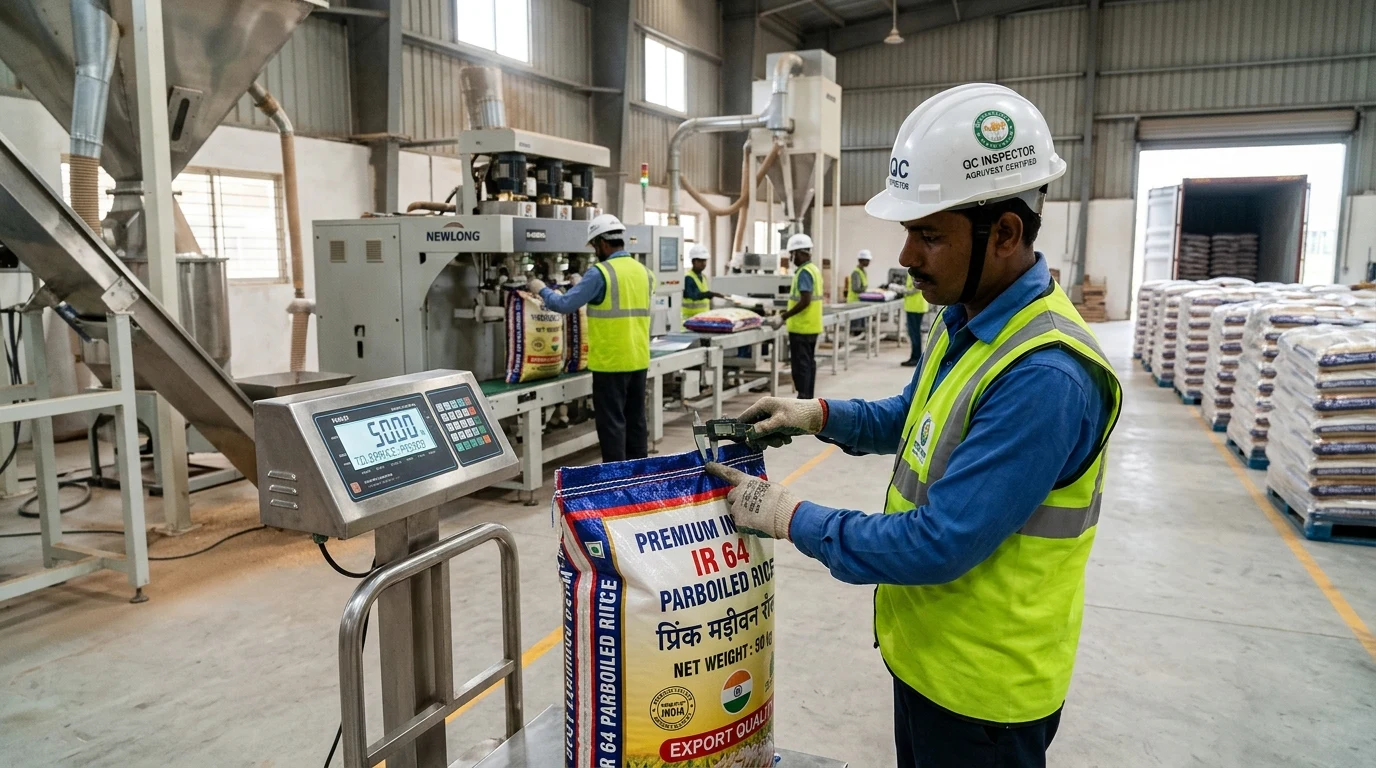
To eliminate destination weighbridge disputes and ensure full institutional compliance, our packaging lines follow a strict 4-step quality assurance system:
- Inline Electronic Scale Calibration: Automated bagging hoppers are calibrated before every production run. Bags are filled to a target gross weight of 50.08kg (accounting for tare bag weight and micro-desiccation during ocean transit) to guarantee a guaranteed net weight of 50.00kg upon discharge.
- Third-Party SGS / Bureau Veritas Supervision: Importers can mandate independent surveyor inspection at the stuffing yard. SGS inspectors conduct random bag extractions, verify tare weights, check stitch seam integrity, and issue an official Certificate of Weight and Quality.
- Heavy-Duty Double-Lock Stitching: All bags are sealed with high-tensile polyester synthetic thread using automated double-chain stitching machines. Crepe paper tape reinforcement is applied on request to eliminate sift leakage.
- Container Desiccant & Liner Protection: Containers are fitted with corrugated craft-paper floor liners and hanging 1,000g calcium chloride desiccant bags to absorb equatorial sweat during the 28-day voyage through tropical waters.
Frequently Asked Questions
Launch Your Private Label Rice Brand Today
Partner with Draba Ventures to engineer custom 25kg and 50kg BOPP packaging for Indian IR 64 parboiled rice. Request our cylinder specifications, bag layout templates, and institutional CIF pricing.
Request Private Label Quotation