The Transit Condensation Crisis in Digital Food Delivery
For virtual restaurants, cloud kitchens, and delivery-first food brands, packaging serves as the entire physical dining experience. Unlike traditional dine-in restaurants where food arrives from kitchen to table within seconds, ghost kitchens dispatch hot meals into third-party courier backpacks for 30 to 50 minutes of transit. During this window, packaging physics determines customer retention and digital store ratings.
When piping hot fried foods, smash burgers, or artisanal fries are packed inside non-porous plastic containers or unvented paperboard, hot steam cannot escape. As temperatures slightly drop, the trapped water vapor undergoes phase condensation, forming liquid droplets on container lids that rain back down onto the food, reducing crispy breading into unpalatable mush.
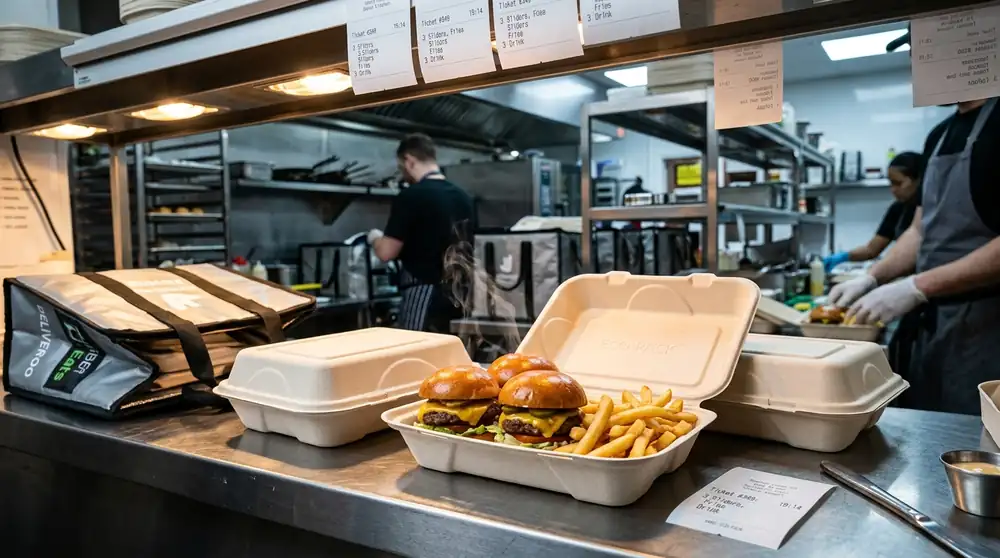
The Micro-Venting Advantage: Molded sugarcane bagasse possesses a naturally breathable lignocellulose structure. Microscopic inter-fiber voids allow high-pressure steam vapor to diffuse outward naturally while retaining sensible heat inside the food chamber, preventing condensation puddling without letting meals get cold.
Packaging Thermodynamics: Bagasse vs. Plastic vs. Paperboard
Review the empirical performance of primary delivery packaging materials under typical 35-minute motorcycle courier conditions:
| Packaging Type | Heat Retention | Moisture Venting | Delivery Food Quality |
|---|---|---|---|
| Sealed PET / PP Plastic | Excellent thermal trap | Zero venting (Creates heavy liquid condensation) | Soggy food; ruined crispy textures |
| Standard SBS Paperboard | Poor insulation | High leakage (Loses heat rapidly through folds) | Cold food upon arrival at doorstep |
| Premium Bagasse Clamshell | High (Thick dense fiber wall) | Balanced (Natural micro-porous steam release) | Hot, crispy, and structurally intact |
Transit Test Results: 45-Minute Delivery Simulation
Commercial laboratory testing measuring internal temperature and French fry texture across an extended 45-minute delivery window demonstrates the bagasse advantage:
| Transit Time | Evaluation Metric | Sealed Plastic Container | Folded Paperboard Box | Draba Molded Bagasse Clamshell |
|---|---|---|---|---|
| 15 Minutes | Core Temp / Crispness | 74°C / Moderate condensation | 61°C / Good crispness | 72°C / Crisp, zero steam puddles |
| 30 Minutes | Core Temp / Crispness | 66°C / Heavy soggy softening | 52°C / Rapid cooling | 67°C / Crisp texture preserved |
| 45 Minutes | Customer Satisfaction | Fails (Soggy customer return risk) | Fails (Food arrived cold) | Passes (Hot, intact, premium rating) |
Multi-Compartment Isolation: Eliminating Sauce Leaks
In addition to steam regulation, delivery packaging must prevent cross-contamination in combo meals. Draba Ventures' multi-compartment bagasse containers feature high internal divider walls with matching lid channels:
- Full-Height Divider Barriers: Molded internal ribs extend all the way to the top lid, preventing hot sauces and salad dressings from spilling into crispy fry compartments.
- Dual Snap-Lock Catches: Twin front corner latches provide positive acoustic feedback when closed, ensuring kitchen packers seal containers securely under rush periods.
- Grease-Resistant Biopolymer Coating: Certified PFAS-free dispersion barrier keeps heavy cooking oils contained for up to 60 minutes with zero outer shell grease bleeding.
Frequently Asked Questions
How do you keep fried food crispy during delivery?
Do bagasse clamshells leak during food delivery?
What is the best packaging for ghost kitchens and cloud brands?
Ready to Secure Certified PFAS-Free Biodegradable Packaging?
Click the WhatsApp icon in the bottom corner to request our lab test reports and live CIF pricing. Our procurement team is online.
Request Cloud Kitchen Samples Chat on WhatsApp