The True Cost of Eating Healthy in Mauritius
For patients recently diagnosed with insulin resistance, pre-diabetes, or Type 2 Diabetes in Mauritius, the immediate dietary advice handed down by medical professionals is often jarring: eliminate white rice. As patients scramble to find alternatives to their lifelong staple, they frequently turn to Western health blogs and international nutrition influencers.
These global platforms frequently push trendy, "superfood" substitutes like imported quinoa, cauliflower rice, or shirataki noodles. However, in an island nation like Mauritius, importing these specialty health grains creates an immense and often unsustainable financial burden for the average household. A diet is only as effective as a patient's ability to afford and adhere to it consistently over years. When a 500g bag of quinoa costs exponentially more than a 5kg bag of staple rice, the dietary intervention is destined to fail.
Accessibility vs. Imported Superfood Trends
While quinoa undoubtedly boasts an impressive nutritional profile - featuring complete proteins and high dietary fiber - its retail cost per serving in Mauritian supermarkets is exceptionally high. Furthermore, quinoa requires entirely different cooking methods and does not pair well with traditional Mauritian curries, rougaille, or vindaye. The cultural disconnect is as significant as the financial one.
RNR 15048 (Low-GI Rice) is naturally cultivated in nutrient-rich soils, entirely avoiding artificial processing. It completely disrupts this paradigm. It provides the exact same - if not superior - blood-sugar management benefits (with a tested GI of 51.5 compared to Quinoa's 53), but functions as a direct, seamless 1:1 culinary replacement for standard rice. Crucially, it is available at a fraction of the cost of imported boutique health grains.
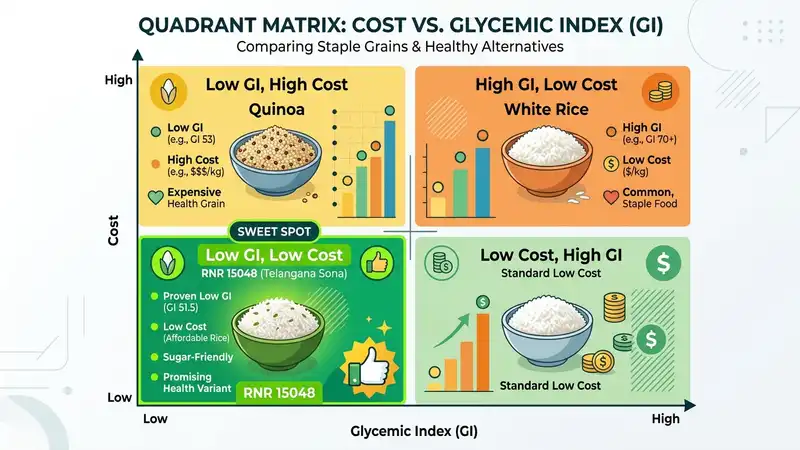
Cost & Efficacy Matrix: Substitutes in Mauritius
To truly understand the value proposition of Low-GI rice, we must look at the data comparing it to other popularized carbohydrate substitutes:
| Carbohydrate Substitute | Glycemic Index (GI) | Relative Retail Cost (Mauritius) | Culinary Adaptability & Adherence |
|---|---|---|---|
| Organic Quinoa | 53 (Low) | Extremely High (Premium Import) | Poor. Requires entirely new cooking habits and flavor profiles. |
| Cauliflower Rice | 15 (Very Low) | High (Requires constant fresh/frozen supply) | Very Poor. Lacks satiation, extremely low caloric density leaves patients hungry. |
| Shirataki (Konjac) Noodles | 0 (Zero) | Extremely High | Poor. Rubbery texture, completely unsuitable for traditional curries. |
| RNR 15048 Low-GI Rice | 51.5 (Low) | Highly Affordable (Standard Grocery Budget) | Perfect 1:1 Rice Replacement. High satiation, identical taste to standard rice. |
The Superior Strategy for Insulin Resistance
Managing insulin resistance requires long-term lifestyle changes, not temporary, expensive diets. By utilizing RNR 15048, Mauritian families can continue to buy their staple carbohydrate in bulk (5kg or 25kg bags) just as they always have. They cook it in the same rice cookers, serve it with the same traditional dishes, and feed it to the entire family without needing to prepare a separate "diabetic meal" for the affected individual.
This universal applicability ensures that the dietary change is permanent, sustainable, and economically viable.
Dietary Note: While RNR 15048 prevents rapid blood sugar spikes, portion control remains a fundamental aspect of diabetes management. Always pair your Low-GI rice with ample lean proteins and high-fiber vegetables for optimal metabolic health.
For Consumers: Stop paying exorbitant prices for imported superfoods. Ask your local Super U, Winners, or pharmacy to stock Draba Ventures' affordable Low-GI Rice.
For B2B Buyers: Are you a Mauritian retailer or distributor? Provide your customers with an affordable health solution. Access our live 120-month price-tracking intelligence dashboard and secure your next shipment today. Contact Draba Ventures
Frequently Asked Questions
Is Quinoa better for insulin resistance than Low-GI Rice?
From a pure blood-sugar perspective, both have a nearly identical Glycemic Index (Quinoa at 53, RNR 15048 at 51.5). However, RNR 15048 is significantly more affordable, accessible, and fits naturally into standard Mauritian diets, making it vastly superior for long-term adherence.
Why is Low-GI rice a more sustainable diet choice in Mauritius?
Low-GI rice replaces the standard carbohydrate staple directly. It does not force drastic culinary habit changes, it tastes great with local cuisine, and crucially, it does not inflate household grocery budgets like trendy imported health foods.
