The Extreme Thermal Demands of Ready-to-Eat Food Chains
The explosive expansion of meal prep subscriptions, ghost kitchens, and supermarket ready-to-eat (RTE) chilled meals has fundamentally altered packaging requirements. A single food container must now endure an unforgiving physical thermal journey: filled with steaming food at 85°C, blast-chilled to -20°C for warehousing, shipped through cold-chain logistics, and ultimately reheated by consumers in microwaves up to 120°C.
When low-grade packaging is subjected to this cycle, mechanical failures are immediate. Thin paperboard boxes absorb condensation and collapse into mush, while cheap plastic containers crack at sub-zero temperatures and leach chemical plasticizers when microwaved.
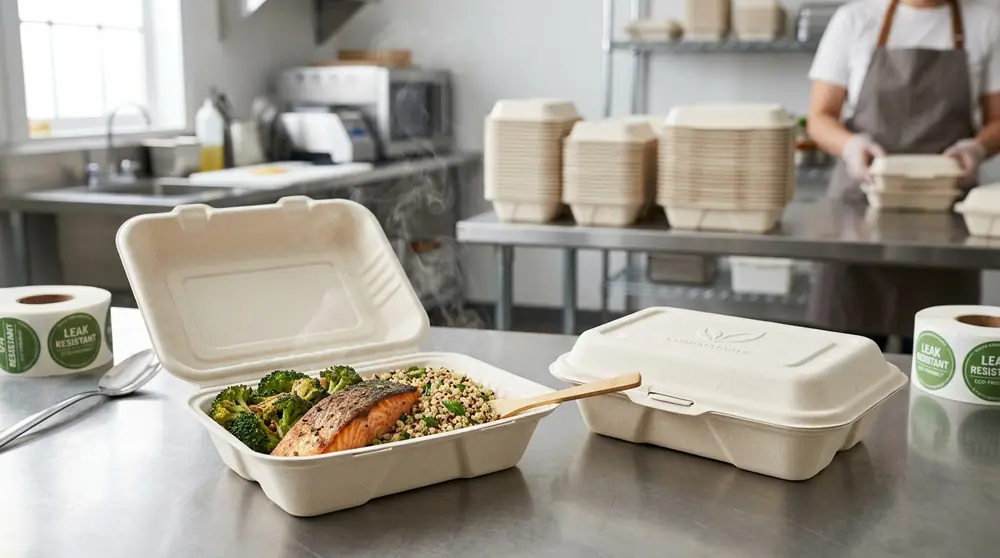
Engineering Distinction: Commercial thermal success depends entirely on fiber length and hydraulic compression density. Heavy-duty wet-press bagasse exceeding 380 GSM achieves tensile strength capable of resisting hydrostatic pressure from ice expansion and steam vapor escape without sidewall delamination.
Thermodynamics of Molded Fiber Across Temperature Extremes
Cellulose fibers naturally expand and contract as moisture shifts phase from liquid to solid ice, and back to pressurized steam. Inferior fiber packaging delaminates because trapped air pockets absorb condensation during thawing. High-performance sugarcane containers manage this through three distinct manufacturing parameters:
- Controlled Density Wet-Pressing: Hydraulic molds applying 150 to 220 bar pressure squeeze out micro-air pockets, creating a tightly compressed crystalline fiber lattice.
- Surface Hydrophobicity: Water-based dispersion treatments prevent water droplets from capillary absorption into core fibers when frost melts during reheating.
- Integrated Venting and Snap-Fit Lids: Lids engineered with precision perimeter gaskets and steam release valves prevent internal vacuum collapse during rapid temperature drops.
Thermal Performance Spectrum: Bagasse vs. Alternative Materials
Review the comparative physical limits of major food packaging substrates under real commercial kitchen conditions:
| Substrate Material | Cold Extreme Limit | Heat Extreme Limit | Microwave Safe (800W) | Condensation Structural Retention |
|---|---|---|---|---|
| Heavy-Duty Molded Bagasse | -20°C (Blast Freezing) | +120°C (Dry Heat) | Safe (Zero chemical leaching) | 92% Wall Rigidity Retained |
| Polypropylene (PP) Plastic | -10°C (Becomes brittle) | +100°C (Softens) | Acceptable (Risk of microplastics) | 100% Water Resistant |
| Polystyrene (PS / Foam) | -15°C (Shatters easily) | +75°C (Deforms/leaches) | Unsafe (Styrene leaching hazard) | 100% (High environmental ban risk) |
| PLA Lined Paperboard | -18°C (Cardboard softens) | +50°C (Liner melts) | Unsafe (Film separates and peels) | 45% (Soggy base collapse) |
| Aluminum Foil Tray | -40°C (Stable) | +250°C (Oven grade) | Hazardous (Arcing/Fire in Microwave) | 100% (High carbon footprint) |
Procurement Specifications for Chilled & Frozen Meal Lines
To avoid delivery leaks and cold-chain damage, institutional buyers must stipulate exact manufacturing parameters in their purchase orders:
| Specification Metric | Target Parameter | Testing Methodology | Quality Objective |
|---|---|---|---|
| Grammage / Density (GSM) | 380 - 450 g/m² | ISO 536 / TAPPI T410 | High sidewall compression resistance |
| Moisture Content (Pre-pack) | < 8.0% | Oven Dry Gravimetric | Prevents frost heave and micro-cracking |
| Cobb 60 (Water Absorption) | < 25 g/m² | ISO 535 Standard | Eliminates sogginess from condensation |
| Oil Holdout (60°C Frying Oil) | > 120 minutes | 3M Kit Test / ASTM F119 | Zero grease ring formation on outer shell |
| Vertical Top-Load Strength | > 25 kg force | ASTM D642 Compression | Permits 5-tier pallet stacking without crushing |
Frequently Asked Questions
Can sugarcane bagasse containers be frozen to -20°C without cracking?
What prevents condensation from softening bagasse during microwave reheating?
What is the maximum oven temperature sugarcane bagasse containers can tolerate?
Optimize Your Chilled & Hot Food Packaging
Deliver flawless customer experiences from freezer storage to dinner tables. Connect with Draba Ventures for high-GSM, freezer-to-microwave certified sugarcane meal boxes.
Inquire About Bulk Supply Chat on WhatsApp