Exporting high-value Indian spices requires rigorous oxygen barrier engineering and mandatory Spices Board QEL testing to pass destination phytosanitary checks. Draba Ventures executes this turnkey spice export logistics pipeline by utilizing multi-wall LDPE-lined packaging to maintain under 10% moisture content, securing plant quarantine fumigation seals, and eliminating pesticide residue compliance risks.
Technical Packaging Specifications: Preserving Volatile Oils
When executing full-service export logistics for Indian spices, the primary operational threat is the evaporation of essential volatile oils (like curcumin in turmeric or piperine in black pepper) and moisture migration during tropical sea transits. Using standard woven sacks guarantees cargo rejection at destination ports.
To mitigate this, Draba Ventures mandates distinct barrier packaging engineering based on the commodity's hygroscopic nature.
| Packaging Material | Moisture Vapor Transmission Rate (MVTR) | Ideal Commodity Application |
|---|---|---|
| Multi-wall Kraft Paper + LDPE Liner | Moderate to Low | Bulk Turmeric Fingers, Whole Coriander |
| Foil-Laminated Vacuum Pouches | Absolute Zero | Ground Spices, Premium Cumin Seeds |
| Food-Grade PP Woven Bags | High (Requires heavy desiccant use) | Dry Red Chilies (Short transit only) |
Moisture Migration & Caking Prevention
Ocean freight traversing the equator undergoes severe diurnal temperature shifts, triggering container rain. Spices must be dried to a strict sub-10% moisture content threshold prior to stuffing. Failure to do so leads to caking and fungal aflatoxin generation. We counter this by deploying high-absorption calcium chloride desiccants within the container. To estimate the impact of desiccant inclusion on your FOB pricing, utilize our Cost Calculator.
The Turnkey Logistics Pipeline & Spices Board Compliance
Navigating the regulatory landscape is non-negotiable. Draba Ventures operates under a valid Certificate of Registration as Exporter of Spices (CRES). Before any container is sealed, the cargo must undergo mandatory analytical testing at a Spices Board Quality Evaluation Laboratory (QEL).
- Pesticide Residue Clearance: Screening for Ethylene Oxide (EO), Salmonella, and Aflatoxins to meet EU and US FDA parameters.
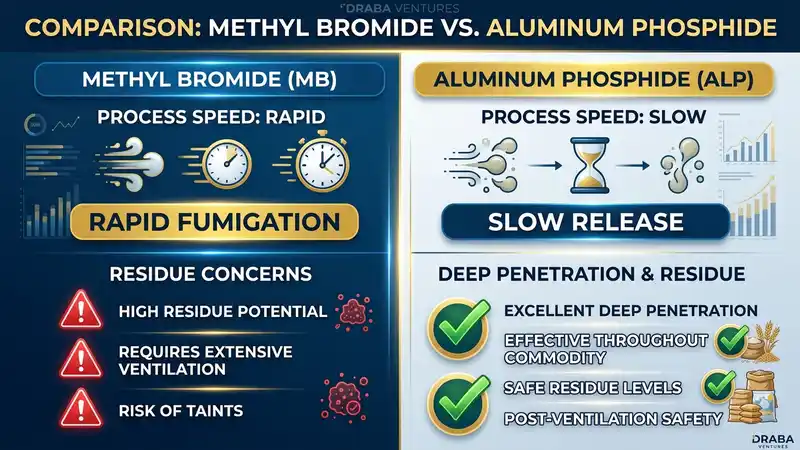
- Plant Quarantine Fumigation: Securing mandatory phytosanitary certificates from the Directorate of Plant Protection, Quarantine & Storage (DPPQS) utilizing aluminum phosphide protocols to eliminate live insect risks.
Institutional Trade Standard
By integrating our APEDA and Spices Board licenses directly into our procurement workflow, we eliminate third-party delays, ensuring your export packaging for spices clears customs instantly.
