South Indian tamarind (Tamarindus indica) cultivated across Karnataka, Tamil Nadu, and Andhra Pradesh represents the undisputed global gold standard for industrial food manufacturing. Grown in semi-arid red laterite soils with intense solar irradiance, South Indian pods develop an extraordinary natural tartaric acid concentration ranging from 12% to 18%, combined with low pH levels (2.8 to 3.1). In industrial wet-processing facilities, this unique terroir yields 62% to 68% usable pulp solids per metric ton, outperforming sweet table-eating Thai cultivars and fibrous African origins by more than 25%. For global sauce blenders, paste packers, and confectionery brands, sourcing South Indian tamarind significantly lowers cost-in-use while delivering uncompromising culinary punch.
The South Indian Cultivation Advantage: Terroir, Soil Chemistry, and Agro-Climatic Superiority
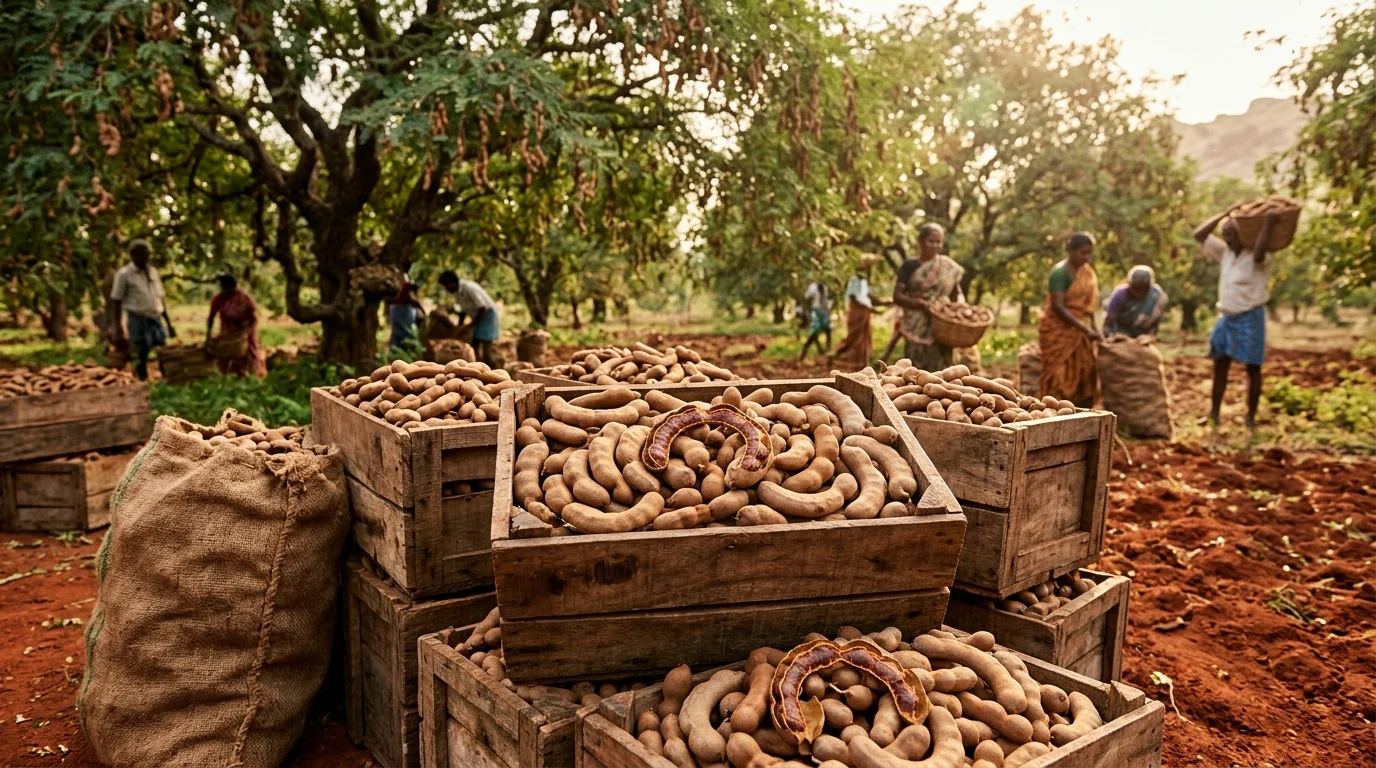
In global agricultural procurement, terroir is often discussed in the context of specialty coffee or fine wine. However, for industrial agro-commodities such as tamarind (Tamarindus indica), environmental conditions play an equally decisive role in dictating chemical composition, pulp density, and commercial yield. South India, particularly the semi-arid Deccan plateau spanning Karnataka, Tamil Nadu, and parts of Andhra Pradesh, possesses a rare agro-climatic matrix that cannot be replicated elsewhere:
- Mineral-Dense Red Laterite Soils: The deep, well-drained lateritic and red loamy soils of southern India are naturally enriched with iron oxides, potassium, and magnesium. These mineral complexes nourish century-old, deep-rooting tamarind trees, catalyzing the metabolic pathways responsible for synthesizing high densities of dicarboxylic organic acids.
- Prolonged Solar Radiation and Dry Ripening: The tamarind crop flowers following the monsoons and matures across dry, rain-free winter and spring months under intense, unbroken sunlight. This arid ripening window forces moisture evaporation directly on the branch, concentrating sugars, acids, and pectins into an exceptionally dense, viscous pulp rather than a watery matrix.
- Genetic Cultivar Resiliency: Indigenous South Indian landraces produce thick, heavy, curved pods with robust shell architecture. These pods naturally protect the interior pulp from pest damage, solar scorching, and fungal sporulation during the critical pre-harvest weeks.
When evaluated against alternative commercial origins, the competitive differentiation is stark. Thai tamarind cultivars (such as Makham Wan) have been systematically bred for consumer table snacking, emphasizing high fructose and low acidity. While palatable for fresh eating, Thai pods lack the tartaric backbone required for industrial processing and deteriorate rapidly under thermal boiling. African tamarind origins, while genetically ancient, are overwhelmingly collected from wild, unmanaged forest stands, resulting in severe batch inconsistency, low flesh-to-seed ratios, and high fiber encrustation. South Indian tamarind stands alone as an intensely cultivated, industrially optimized processing powerhouse.
High Tartaric Acid and Culinary Punch: Chemical Profile and Acidulant Dynamics
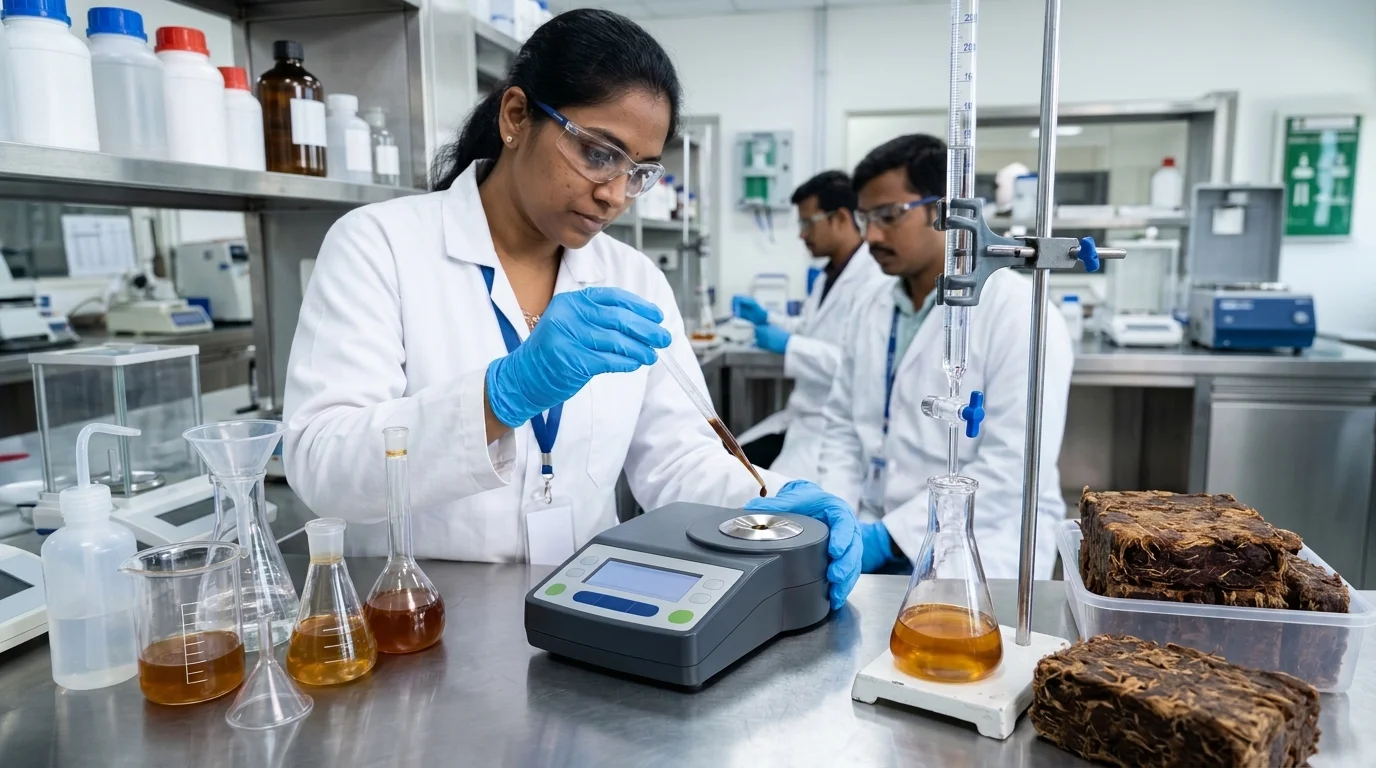
Tartaric acid (C4H6O6) is the signature biochemical marker of quality tamarind. Unlike citric or malic acids which deliver fleeting, superficial sour notes, tartaric acid produces a lingering, deep, astringent tang that anchors complex savory and sweet formulations. South Indian tamarind contains the highest natural concentration of tartaric acid recorded in the plant kingdom, consistently testing between 12% and 18% titratable acidity by weight, with active pH levels dropping between 2.8 and 3.1.
This concentrated chemical profile is non-negotiable for two major global manufacturing sectors:
- Middle Eastern Condiment and Paste Manufacturers: Across the UAE, Saudi Arabia, Oman, and Egypt, traditional culinary staples like tamarind paste, marinades, and sour dipping sauces demand an assertive acidic bite capable of balancing heavy meat fats and fragrant spices. Processors utilizing South Indian pulp achieve their signature sharp profile entirely through natural crop acidity, completely eliminating the need for artificial chemical acidulants, buffering salts, or synthetic flavoring agents.
- Latin American Confectionery and Snack Brands: Mexico's massive confectionery sector produces billions of units of tamarind candies, spicy chamoy sauces, and chili-coated fruit pulp (such as pulparindo style treats). These formulations require intense, heat-stable acidity that will not invert sugars or break down under high-temperature extrusion cooking. South Indian tamarind's natural tartaric and potassium bitartrate buffer protects product texture, prevents moisture weeping, and delivers the unmistakable sour-spicy sensation that consumers crave.
Superior Pulp Density and FMCG Extraction Yields: Processing Economics and Soluble Solids
For industrial food processors, procurement decisions cannot be based on purchase price per metric ton alone. The true operational benchmark is the cost-in-use extraction yield: the quantity of usable, soluble tamarind solids recovered after mechanical destoning, fiber stripping, and aqueous maceration.
South Indian tamarind features an exceptionally high pulp-to-pod ratio, yielding thick, cohesive, dark-amber pulp with minimal cellular water content. In automated extraction facilities, South Indian tamarind demonstrates unparalleled processing economics:
| Origin & Cultivar Classification | Natural Tartaric Acid Range (%) | Brix Level (Soluble Solids) | Pulp Extraction Yield (per MT) | Fibre & Seed Waste Ratio | Primary Industrial Suitability |
|---|---|---|---|---|---|
| South Indian Industrial Crop (Draba Ventures) | 12.0% - 18.0% | 65° - 70° Bx | 62% - 68% Recoverable Solids | Low (< 35% total pod weight) | Industrial Pastes, Sauces, Confectionery, Chutneys |
| Thai Commercial Sweet Cultivars | 2.5% - 5.5% | 50° - 58° Bx | 45% - 52% Recoverable Solids | Moderate (High seed weight) | Table Fruit, Snacking, Dehydrated Candied Slices |
| African Wild Forest Tamarind | 7.0% - 11.0% | 48° - 55° Bx | 40% - 48% Recoverable Solids | High (> 50% fiber and heavy seeds) | Local Brewing, Rustic Decoctions, Animal Feed |
Because South Indian tamarind delivers up to 68% usable solids, an industrial processor requires approximately 20% to 25% fewer metric tons of raw raw commodity to manufacture an equivalent batch volume of 65° Brix commercial concentrate compared to alternative origins. Furthermore, South Indian pulp possesses elevated levels of natural pectin (2.5% to 4.0%), which accelerates natural gelling and reduces the boiling time required in industrial vacuum evaporators. This dynamic translates directly into lower energy expenditures, shorter batch cycle times, and maximized plant throughput.
Direct Procurement and Traceability: Farm-Gate Aggregation Across Southern India
Despite the inherent superiority of the South Indian crop, international buyers frequently encounter quality volatility when procuring through multi-tier wholesale brokerage networks. Traditional supply chains route tamarind through multiple local middlemen, rural mandi auctions, and unmonitored holding depots, resulting in lot co-mingling, moisture reabsorption, and aged inventory blending.
Draba Ventures solves this supply chain risk through our proprietary direct procurement architecture anchored across Karnataka, Tamil Nadu, and Andhra Pradesh:
- Direct Farm-Gate and Cooperative Contracting: We source directly from vetted agricultural cooperative clusters and farm holdings in historical tamarind-growing belts like Bellary, Tumkur, Krishnagiri, and Dharmapuri. Bypassing intermediary brokers ensures complete seasonal freshness and transparent origin documentation.
- Controlled Facility De-fibering and Grading: Harvested pods are transported directly to Draba Ventures partner processing facilities. Here, the crop undergoes mechanical deshelling, destoning, and manual fiber-stripping under strict sanitary standards, ensuring foreign matter and seed fragment tolerances remain well below 0.5%.
- Strict Moisture and Laboratory Assays: Every processed batch is calibrated to a target moisture content below 18% to permanently arrest white mold sporulation. In-house quality control testing validates tartaric acid percentages, Brix levels, and absence of chemical adulterants before final container loading.
- Batch-Level Traceability and Government Certification: International consignments are shipped with full harvest lot traceability codes, export grade verification by APEDA, quality and weight certifications by independent inspection agencies like SGS or Bureau Veritas, and official Government Phytosanitary Certificates issued by the Indian Ministry of Agriculture.
Secure Premium South Indian Tamarind for Your Manufacturing Operations
Source high tartaric acid (12-18%), high-yield seedless tamarind slabs and blocks directly from southern India. Maximize your processing extraction economics with full origin traceability, SGS verification, and guaranteed phytosanitary clearance.
Request South Indian Tamarind Quotation