The Operational Nightmare of Soggy Paper Tableware in Catering
For banquet managers and outdoor caterers specializing in South Asian, Middle Eastern, and Mediterranean culinary events, tableware failure is an immediate reputation killer. Authentic ethnic cuisines feature high-density, oil-rich gravies, boiling lentil dals, and heavy rice pilafs served at temperatures exceeding 80°C. When placed on conventional disposable tableware, disasters occur within minutes.
Standard uncoated paperboard absorbs boiling oil immediately, becoming limp and structurally compromised. PLA-lined alternatives delaminate under simmering sauces, while thin bagasse plates often sweat moisture onto guests' clothing. To prevent collapses, catering crews resort to 'double-plating' or 'triple-plating' - doubling tableware consumption and destroying event profit margins.
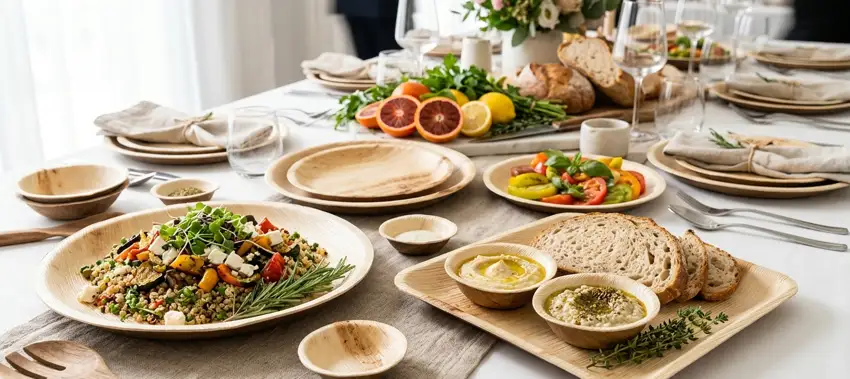
The Double-Plating Fallacy: Purchasing cheap paper plates at $0.07 per unit seems economical until catering staff distribute two to three plates per diner to prevent spills, escalating the real cost per serving to $0.14 - $0.21. A single premium 10-inch Areca leaf plate at $0.15 delivers complete structural rigidity at lower total expenditure.
Material Anatomy: The Lignocellulose Natural Cuticle
Areca palm leaf plates succeed where paper and bioplastics fail due to their natural anatomical structure. The sheath of the Areca catechu palm features a distinct natural wax cuticle on its upper surface, designed by nature to protect the growing palm frond from torrential monsoon rains and intense tropical heat.
During manufacturing, hydraulic heated presses mold the leaf at 160°C without destroying this natural protective layer. The process compresses the cellular matrix into a rigid composite board that resists liquid penetration and heat transfer.
- Hydrophobic Cuticle Surface: Repels boiling water and cooking oils naturally without requiring synthetic fluorochemical (PFAS) dispersion coats.
- Thermal Insulation Matrix: Microscopic cellular air voids within the leaf sheath dissipate heat, keeping the underside comfortable to touch even when holding 90°C food.
- Structural Load Capacity: Dense longitudinal fibers deliver high flexural modulus, allowing a single 10-inch square plate to carry up to 1.5 kg of food without bending.
Performance Testing: Tableware Under Heavy Curry Loading
Commercial performance testing illustrates how Areca palm leaf outperforms conventional disposable substrates under real catering conditions:
| Tableware Material | Hot Oil Holdout (85°C) | Boiling Liquid Holdout (95°C) | Hand Heat Transfer | Structural Sag Risk |
|---|---|---|---|---|
| Premium Areca Palm Leaf | 4+ Hours (Zero seepage) | 3+ Hours (Rigid) | Low (Natural thermal insulator) | Zero (High flexural modulus) |
| Uncoated Paper Plate | Fails in < 3 minutes | Fails in < 2 minutes | Severe (Burns fingers) | Catastrophic collapse |
| PLA-Lined Paperboard | 15 - 25 minutes | 10 - 20 minutes (Liner softens) | High (Requires charger plate) | High (Corner fold failure) |
| Standard Molded Bagasse | 45 - 60 minutes | 30 - 45 minutes | Moderate (Base sweating) | Moderate (Rim softening) |
| Polystyrene (Foam) | Resistant (Chemical risk) | Deforms above 75°C | Low (Insulating) | High (Snaps under heavy weight) |
Wholesale Unit Economics: Real Cost per Serving
Calculating the true landed cost of tableware requires factoring in consumption rates, waste disposal surcharges, and guest satisfaction metrics:
| Cost Metric | Paperboard (Double-Plated) | Areca Palm Leaf (Single-Plated) | Catering Savings Impact |
|---|---|---|---|
| Nominal Unit Cost | $0.08 per piece | $0.15 per piece | Areca appears higher initially |
| Plates Consumed per Diner | 2.2 plates average | 1.0 plate strictly | 55% reduction in total units handled |
| True Cost per Serving | $0.176 per diner | $0.150 per diner | 14.7% Direct Cash Savings |
| Event Waste Volume | High volume trash bins | 50% less physical volume | Reduced cleanup labor and haulage |
| Food Spill Incident Rate | Frequent buffet accidents | Virtually zero breakage | Protects venue deposits and brand prestige |
Frequently Asked Questions
Can Areca palm plates hold hot gravies and oily curries without leaking?
Do Areca palm leaf plates get uncomfortably hot to hold?
Why does switching to Areca palm tableware eliminate double-plating costs?
Upgrade Your Catering Tableware Portfolio
Eliminate messy food spills and elevate event presentation. Draba Ventures exports premium, export-grade Areca palm leaf plates and platters directly from verified South Indian processing facilities.
Request Wholesale Quotation Chat on WhatsApp