Methyl Bromide acts rapidly but is heavily restricted in the EU and Middle East due to residue limits, whereas Aluminum Phosphide is slow-acting but ideal for deep-cargo penetration during long ocean transits. Exporters must select the fumigant based on the destination port's strict biosecurity mandates and voyage duration to avoid clearance delays and cargo rejection.
The Physics of Cargo Fumigation
Agricultural commodities shipped in 20ft FCLs are highly susceptible to weevil infestation during transit. Fumigation is not a choice—it is a mandatory phytosanitary requirement governed by the IPPC (International Plant Protection Convention). However, the choice of chemical depends entirely on destination biosecurity laws.
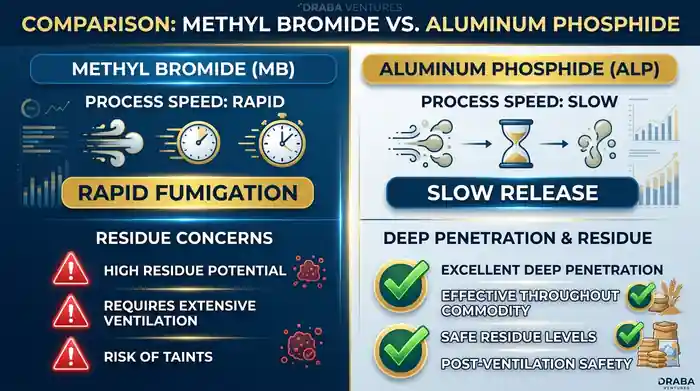
Comparative Analysis: MB vs. ALP
| Parameter | Methyl Bromide (CH3Br) | Aluminum Phosphide (AlP) |
|---|---|---|
| Action Speed | Rapid (24 to 48 hours exposure) | Slow (7 to 14 days release) |
| Application Mode | Gas injection prior to sealing | Solid tablets/sachets reacting with moisture |
| Penetration | Surface to mid-level | Deep penetration through bulk stacks |
| Residue Risk | High (Bromide ion residues) | Low (Leaves harmless aluminum hydroxide dust) |
| Compliance Profile | Banned/Restricted in EU; Accepted in parts of Africa/Asia | Globally accepted standard for transit fumigation |
Destination Port Clearance Hurdles
When a vessel arrives, port health authorities do not simply look at the Phytosanitary Certificate. They conduct active gas concentration testing at berth.
- Ventilation Delays: Containers fumigated with Phosphine must be safely ventilated upon arrival. If gas readings exceed 0.1 ppm, the container will be quarantined on the dock, incurring heavy demurrage. (Calculate demurrage impacts using our Cost Calculator).
- Residue Violations: In EU ports, if Methyl Bromide was used and residue tests exceed the Maximum Residue Limit (MRL) of 5-50 mg/kg (depending on the grain), the entire cargo is condemned and destroyed at the shipper's expense.
Draba Protocol
Draba Ventures utilizes state-of-the-art Aluminum Phosphide sachet arrays for all long-haul shipments to Africa and the Middle East, ensuring zero toxic residue upon arrival and seamless customs clearance.