The Dangerous Illusion of Unbundled FOB Factory Pricing
Procurement teams frequently miscalculate landed costs by relying on artificially low FOB India quotes that mask massive ocean freight and terminal handling markups. On an international balance sheet, an attractive Free On Board (FOB) price quotation can rapidly unravel once spot ocean freight rates surge, container positioning fees are billed, and demurrage penalties accumulate at destination discharge ports. For bulky, lightweight goods like disposable tableware, freight volatility can represent up to 30% of total delivered expense.
Purchasing on Cost, Insurance, and Freight (CIF) terms shifts logistics volatility and transit liability to the manufacturer. By locking in guaranteed CIF rates at your destination port of entry, commercial distributors eliminate unexpected freight surcharges, insulate their operating cash flows, and accurately forecast their per-unit wholesale resale margins months before container discharge.
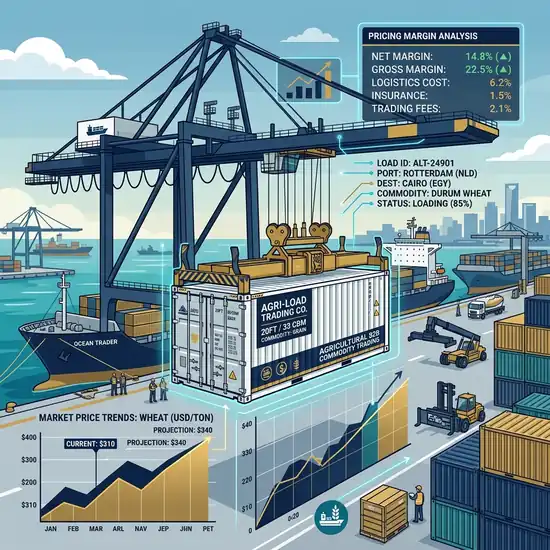
Logistics Economics Benchmark: Under Incoterms 2020 CIF terms, Draba Ventures books ocean freight contracts, marine insurance coverage (Institute Cargo Clauses A), and origin terminal handling charges. Buyers receive fixed, predictable landed unit pricing without spot shipping exposure.
FOB vs. CIF: Strategic Procurement Matrix
Compare the operational boundaries, cost exposures, and management overhead associated with each trade term:
| Procurement Dimension | FOB (Free On Board - Indian Port) | CIF (Cost, Insurance & Freight - Buyer Port) |
|---|---|---|
| Freight Booking Responsibility | Buyer coordinates freight forwarders and carrier bookings | Draba Ventures manages carrier booking & space allocation |
| Ocean Freight Rate Volatility | Buyer absorbs GRI (General Rate Increases) and bunker fuel spikes | Fixed landed rate locked at time of proforma invoice |
| Marine Cargo Insurance | Buyer must arrange individual marine transit policy | Comprehensive All-Risk marine insurance included |
| Demurrage & Detention Risk | High risk due to carrier miscommunication or rollover | Minimized through pre-negotiated free time at discharge port |
| Cash Flow Predictability | Unpredictable; final freight invoice arrives weeks after departure | Absolute financial certainty before shipment departure |
Volumetric Mathematics: Packing 350,000 Plates in a 40ft HC
Areca palm leaf plates are rigid, non-flexible, natural thermoformed products. Unlike flexible paperboard, they cannot be compressed without risking stress fractures. Achieving optimal shipping economics requires engineering the master carton to match the internal cubic volume of a standard 40ft High Cube container:
- 40ft High Cube Internal Volume: 76.4 cubic meters (CBM) / 2,698 cu ft.
- Max Usable Loading Volume: ~68.0 to 71.0 CBM (allowing for door clearance and standard top spacing).
- Standard 10-Inch Round Plate Packing: 25 plates per shrink-wrapped moisture-barrier pack; 4 packs (100 plates) per heavy-duty 5-ply corrugated master carton.
- Master Carton Dimensions: 540 mm (L) x 275 mm (W) x 275 mm (H) = 0.0408 CBM per carton.
- Total Cartons Loaded: Approximately 1,700 to 1,750 master cartons.
- Total Unit Capacity: Up to 350,000 plates per 40ft HC container under optimized hand-stack configurations.
| Container Specification Parameter | Loose / Uncalibrated Packing | Draba Precision Hand-Stacked 40ft HC |
|---|---|---|
| Usable Volume Utilization | 52.0 CBM (Poor carton geometry) | 70.2 CBM (91.8% container cube efficiency) |
| Total Master Cartons | 1,275 cartons | 1,750 master cartons |
| Total 10-Inch Areca Plates | 255,000 units | 350,000 units (Full Container Load) |
| Ocean Freight Expense per Plate | $0.0157 per unit | $0.0114 per unit (27.4% freight savings per plate) |
| Moisture Barrier Desiccants | Basic silica packets | High-absorption calcium chloride container dry-bags |
Transparent CIF Cost Breakdown to Major Ports
Draba Ventures quotes locked CIF prices to primary Western container ports, including Rotterdam, Hamburg, Felixstowe, New York/Newark, Savannah, and Long Beach. Our direct export contracts protect your wholesale margins from carrier volatility while ensuring priority vessel space allocations during peak harvest seasons.
Frequently Asked Questions
How many Areca palm plates fit in a 40ft HC container?
Is CIF pricing better than FOB for importing packaging?
Why is volumetric weight important for eco-packaging imports?
Ready to Secure Certified PFAS-Free Biodegradable Packaging?
Click the WhatsApp icon in the bottom corner to request our lab test reports and live CIF pricing. Our procurement team is online.
Request CIF Container Pricing Chat on WhatsApp