The Hidden Waste Management Penalties in Enterprise Dining
Facilities management directors and corporate foodservice contractors managing employee cafeterias across tech campuses, financial headquarters, and industrial facilities face escalating waste haulage bills. Historically, cafeterias relied on plastic plates, petroleum cutlery, and paper cups. While initial purchase costs were low, corporate waste streams resulted in severe contamination penalties.
When employees discard greasy food residue into recycling bins or mix plastic forks into organic composting streams, commercial waste haulers (such as Waste Management and Republic Services) levy substantial contaminated load penalties ranging from $150 to $500 per dumpster pull. To eliminate these recurring fines, forward-thinking enterprises are transitioning to a unified single-stream organic waste model.
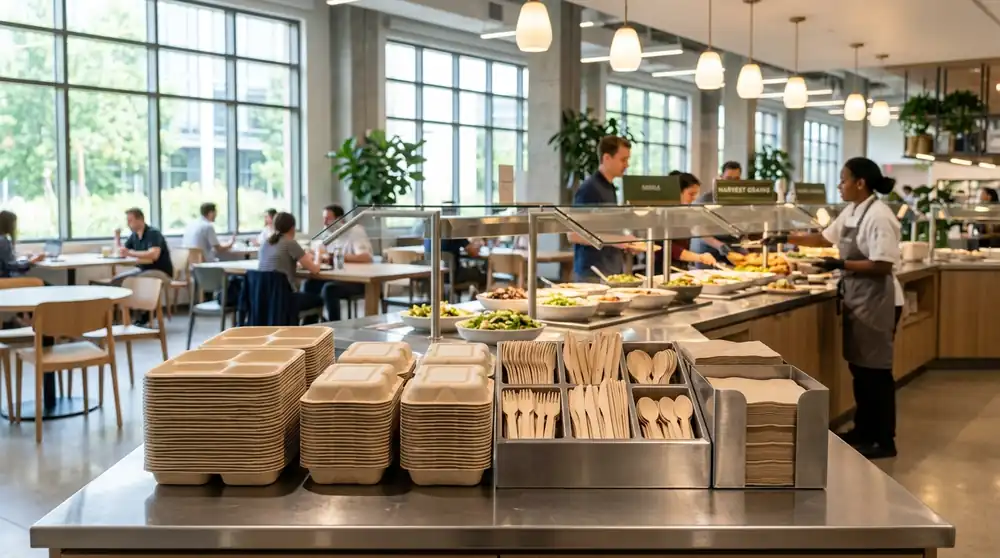
The Single-Stream Efficiency Gain: In a 100% compostable dining room, all discarded tableware - sugarcane plates, soup bowls, birchwood cutlery, and unconsumed food scraps - is deposited into a single organic composting bin. This completely eliminates manual back-of-house sorting labor and reduces landfill haulage volume by up to 85%.
Procurement Arbitrage: Direct Mill Import vs. Domestic Distributors
The principal barrier preventing enterprise cafeterias from adopting compostable tableware has been the markup imposed by domestic packaging middlemen. Regional broadline distributors frequently apply 40% to 65% gross margins on eco-tableware SKUs, making sustainable products appear cost-prohibitive.
By establishing direct supply relationships with primary Indian manufacturers like Draba Ventures, corporate purchasing consortiums import 40ft High Cube containers on CIF terms, bypassing distributor layers entirely:
| Waste Stream Configuration | Tableware Material | Hauling & Sorting Fees | Overall Economics |
|---|---|---|---|
| Mixed (Plastic + Food) | Polystyrene / PET plastic | High (Contamination fines & landfill surcharges) | High long-term operating cost |
| Domestically Sourced Eco | Bagasse / Wooden cutlery | Low (Single-stream organic compost) | High upfront unit purchase cost |
| Indian CIF Sourced Eco | Bagasse / Wooden cutlery | Low (Single-stream organic compost) | Lowest Total System Operating Cost |
Enterprise Financial Model: 5,000 Meals Daily
Review the comprehensive annual expenditure breakdown for a large corporate campus dining facility serving 5,000 meals per business day (1.25 million meals annually):
| Expense Category | Conventional Plastic + Landfill | Domestic Eco Distributor | Draba Direct CIF Factory Container |
|---|---|---|---|
| Annual Tableware Purchase | $112,500 ($0.09/meal set) | $212,500 ($0.17/meal set) | $137,500 ($0.11/meal set) |
| Waste Hauling & Landfill Fees | $54,000 (120 pulls/year) | $22,000 (Organics diversion) | $22,000 (Organics diversion) |
| Contamination & Sorting Fines | $18,500 (Mixed stream penalties) | $0 (Single-stream zero-sort) | $0 (Single-stream zero-sort) |
| Total Annual Dining Waste Cost | $185,000 | $234,500 | $159,500 (Net Lowest Total Spend) |
Frequently Asked Questions
How does compostable tableware reduce corporate cafeteria costs?
Is biodegradable tableware more expensive than plastic?
Can bagasse plates handle heavy cafeteria meals?
Ready to Secure Certified PFAS-Free Biodegradable Packaging?
Click the WhatsApp icon in the bottom corner to request our lab test reports and live CIF pricing. Our procurement team is online.
Request Enterprise Contract Terms Chat on WhatsApp