The Industrial Failure of Polylactic Acid in Foodservice
Over the last decade, corporate dining executives and event caterers invested heavily in Polylactic Acid (PLA) bioplastics as an alternative to single-use polystyrene and polypropylene. Synthesized from fermented corn starch or sugarcane dextrose, PLA arrived with ambitious promises of renewable sustainability. However, high-volume catering operators quickly discovered that PLA creates severe operational challenges during live events.
The core vulnerability of PLA lies in its physical thermal profile. PLA exhibits a low glass transition temperature of approximately 55°C (131°F). When hot catered entrées, freshly roasted meats, or boiling soups are served onto PLA dishes, the polymer softens, buckles, and collapses in guests' hands.
Composting Reality Check: While marketed as compostable, PLA requires commercial industrial composting facilities maintaining sustained 60°C temperatures and controlled moisture for months. In backyard gardens, city parks, or standard landfills, PLA behaves like conventional petroleum plastic, persisting for decades without breaking down.
Material Efficacy: The Areca Palm Leaf Advantage
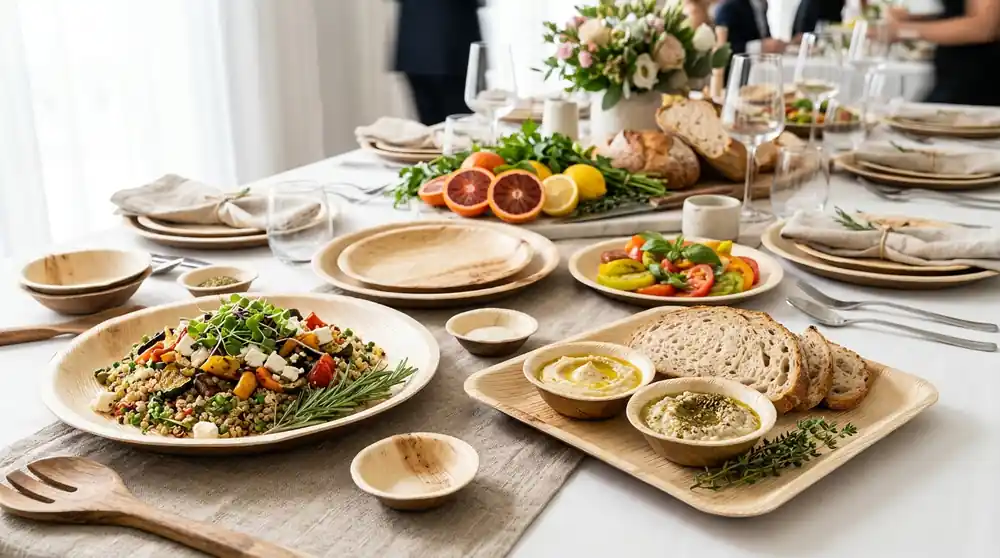
Unlike bioplastics that require chemical synthesis and polymer polymerization, Indian Areca palm leaf tableware is completely mechanical and organic. Harvested in Karnataka and southern India, these plates utilize naturally fallen leaves from the Areca catechu palm tree. No living trees are ever cut down.
The fallen leaf sheath possesses dense, aligned natural lignocellulose fibers bound by natural plant lignin. When exposed to hydraulic heat-pressing at 160°C, the natural lignin softens momentarily and fuses the fiber matrix into a rigid, non-porous structure.
- Exceptional Heat Tolerance: Areca plates easily hold food up to 100°C without warping, softening, or transferring heat to diners' fingers.
- Backyard Compostability: Breaks down completely into natural humus in backyard gardens and standard soil within 60 to 90 days without industrial processing.
- Zero Synthetic Binders: Manufactured with zero resins, chemical bleaches, or plastic liners.
Direct Technical Comparison: Areca Palm vs. PLA
For procurement managers calculating event risk and brand prestige, the physical performance differences between natural palm leaf and synthetic bioplastic are stark:
| Performance Metric | Areca Palm Leaf Plates | C-PLA / PLA Bioplastics | Operational Impact |
|---|---|---|---|
| Thermal Stability Limit | -20°C to +120°C | Softens at 50°C - 55°C | Areca prevents plate collapse with hot meals |
| Home Compostability | 100% Backyard (60-90 Days) | 0% (Requires 60°C Industrial Plant) | Areca eliminates commercial waste-hauler fees |
| Raw Material Source | Naturally shed fallen leaf sheath | Chemically synthesized corn starch | Areca uses zero agricultural land disruption |
| Liquid & Oil Resistance | Natural cuticle layer (2+ Hours) | Waterproof (until heat deformation) | Areca maintains rigidity with hot curries |
| Microwave & Oven Safe | Safe up to 2 minutes (microwave) | Unsafe (Melts instantly) | Areca allows rapid pre-event warming |
| Aesthetic Brand Value | Distinctive natural organic wood grain | Translucent synthetic plastic finish | Areca elevates luxury corporate catering optics |
Bulk Logistics and Container Shipping Profiles
Because Areca leaf plates are pressed from natural sheaths, moisture control during transoceanic shipping is critical. Draba Ventures coordinates thorough oven-drying (reducing moisture content below 10%), shrink-wrapping in food-grade packs of 25, and placing silica gel desiccants in every master carton to ensure zero mold growth during 30-day ocean transits.
| Plate Dimension / Profile | Pcs / Shrink Pack | Pcs / Master Carton | Cartons / 40ft HC | Total Units / 40ft HC |
|---|---|---|---|---|
| 10-inch Square Dinner Plate | 25 | 100 | 1,150 | 115,000 |
| 10-inch Round Dinner Plate | 25 | 100 | 1,280 | 128,000 |
| 8-inch Square Side / Salad Plate | 25 | 200 | 1,050 | 210,000 |
| 6-inch Square Dessert / Snack Plate | 25 | 200 | 1,450 | 290,000 |
| 6-inch Round Deep Bowl (180ml) | 25 | 200 | 1,300 | 260,000 |
Frequently Asked Questions
Why is PLA bioplastic failing in commercial catering environments?
Are Areca palm leaf plates completely chemical-free?
How fast do Areca palm leaf plates degrade after disposal?
Source Premium Areca Palm Tableware Direct from India
Eliminate catering failures and plastic compliance risks. Contact Draba Ventures for export container pricing, custom mold assortments, and complete phytosanitary documentation.
Request Wholesale Catalog Chat on WhatsApp