Mechanical friction and bag drop stress during rail-to-road transfers inevitably increase broken grain percentages by 0.5% to 2.0% during transit. To prevent breach of contract at destination, exporters must over-deliver on quality at the mill and utilize specialized tight-packing techniques (like 50kg PP bags with inner liners) to dampen vibrational forces.
The Physics of Grain Friction in Transit
When long-grain rice (like IR64 or 1121 Basmati) travels from an Inland Container Depot (ICD) to a seaport, and subsequently to a remote destination hub via multimodal transport, it undergoes severe kinetic stress. Every time a crane lifts a container, or a forklift drops a pallet, the internal kinetic energy forces the grains to grind against each other.
If a cargo is certified at 5.0% brokens at the loading port, vibrational settling and bag-drop shock can push that figure to 6.5% by the time it reaches a warehouse in Kano, Nigeria, or Nairobi, Kenya.
The Degradation Predictive Model
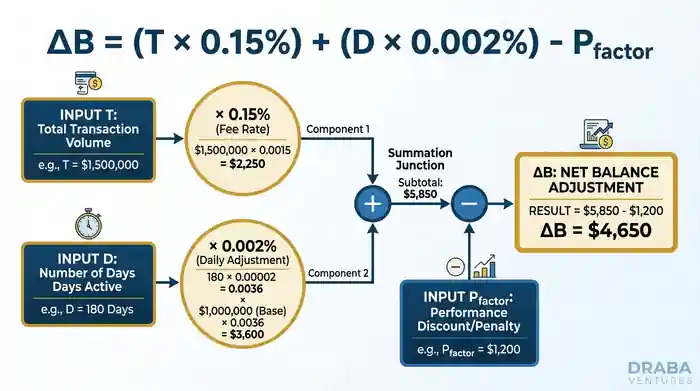
Draba Ventures utilizes a predictive mathematical model to estimate expected breakage, allowing us to source appropriately from the mandi. (Track live mandi rates on our Market Intelligence Hub).
ΔB = (T × 0.15%) + (D × 0.002%) - P_factor
- ΔB: Total increase in broken percentage
- T: Number of handling touches (Rail to truck, port crane, etc.)
- D: Total distance in kilometers
- P_factor: Packaging dampening factor
Packaging Interventions
The P_factor is the only variable the exporter can control. The tightness of the bag determines the internal freedom of movement for the grains.
| Packaging Type | Internal Movement | Dampening (P_factor) | Suitability for Multimodal |
|---|---|---|---|
| 25kg Retail BOPP Bag | High (Loose fit) | Low (0.1%) | Poor (Prone to high breakage) |
| 50kg PP Bag (Standard) | Medium | Medium (0.4%) | Acceptable |
| 50kg PP Bag with Inner Liner | Zero (Vacuum-like tightness) | High (0.9%) | Excellent (Best protection) |
Draba Quality Guarantee
We purposefully mill our cargo 1.5% below your maximum broken tolerance. If you order 5% broken rice, we load 3.5% broken at the mill, guaranteeing compliance upon final inland delivery.