For breakbulk and containerized grain shipments, Institute Cargo Clause (A) is overwhelmingly recommended over Clause (C). While Clause (C) is cheaper, it only covers major vessel casualties (like sinking or fire). Clause (A) provides broader "All Risks" coverage, crucially protecting against freshwater damage, container condensation (sweat), and rough handling—which are the most common causes of grain loss during domestic coastal transit or export from Indian ports.
The Rising Importance of Marine Insurance in Rice Trade
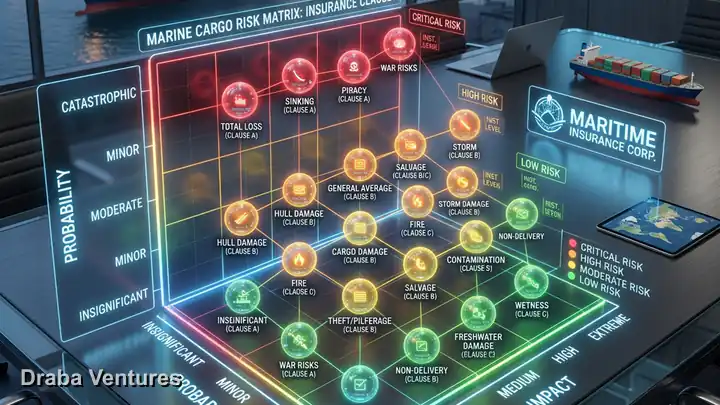
When sourcing bulk rice from the Tungabhadra irrigation belt (Sindhanur, Gangavati, Karatagi, Raichur), inland road transport relies heavily on standard transit insurance. However, for buyers moving heavy volumes via coastal shipping to markets in Gujarat, Maharashtra, or Kerala, or for direct exports via Chennai, Krishnapatnam, or Mangalore ports, standard transit insurance no longer applies.
Once your Sona Masuri or RNR rice crosses the ship's rail, you are entering the realm of maritime law. The standard policy mechanism used worldwide—and legally enforced in India—is based on the London market's Institute Cargo Clauses (ICC). For agri-commodity buyers, choosing between Clause (A) and Clause (C) is often the difference between fully recovering the cost of a ruined cargo or suffering a devastating balance sheet loss.
Institute Cargo Clause (C): The Bare Minimum
Institute Cargo Clause (C) is the most basic level of marine cargo insurance. Many price-sensitive bulk buyers opt for Clause (C) simply to tick the "insured" box on their Letter of Credit or domestic transit paperwork. However, it only protects against catastrophic events.
Clause (C) will cover your Sona Masuri shipment if:
• The vessel sinks, capsizes, or strands.
• The vessel collides with another ship or a port structure.
• There is a fire or explosion on board.
• Cargo is intentionally jettisoned (thrown overboard) to save the ship.
What it DOES NOT cover is critical for grain: Clause (C) does not cover damage from freshwater, heavy weather (unless the vessel strands), container sweat, theft, or pilferage during port handling. If heavy rains leak into a poorly sealed breakbulk hatch and ruin 50 Metric Tons of your Kolam rice, Clause (C) will not pay out a single Rupee.
Institute Cargo Clause (A): "All Risks" Coverage
Clause (A) is the gold standard for agricultural shipping. It is commonly referred to as an "All Risks" policy. Unlike Clause (C), which specifically names the perils it covers, Clause (A) covers all risks of physical loss or damage, unless specifically excluded in the policy wording.
For rice shipments, Clause (A) is vital because it covers:
• Freshwater Damage: Rain entering the hold or container during loading/unloading at the port.
• Condensation / Sweat: Moisture buildup in containers moving across different temperature zones (e.g., from tropical Mangalore to cooler winter conditions in North Gujarat).
• Handling Damages: Hook damage to PP woven bags or rough handling at the docks resulting in spillage.
Note on Exclusions: Even Clause (A) does not cover "Inherent Vice" (the natural tendency of a product to spoil if loaded with too high moisture). This is why Draba Ventures ensures all shipments maintain a strict moisture level of under 14% prior to dispatch.
Detailed Comparison: Clause (A) vs. Clause (C) for Grain Cargo
Here is how the two clauses stack up when applied to bulk shipments of 26kg PP bags or 50kg export bags of rice:
| Risk Event / Peril | ICC (C) - Basic Cover | ICC (A) - All Risks Cover |
|---|---|---|
| Fire or Explosion | Covered | Covered |
| Vessel Stranding, Sinking, Capsizing | Covered | Covered |
| Collision with another vessel | Covered | Covered |
| Jettison (Cargo thrown overboard) | Covered | Covered |
| General Average Contribution | Covered | Covered |
| Heavy weather / Seawater ingress | Not Covered (unless vessel stranded) | Covered |
| Freshwater damage (Rain, Hatch Leaks) | Not Covered | Covered |
| Container Condensation (Sweat) | Not Covered | Covered |
| Theft, Pilferage, and Non-Delivery | Not Covered | Covered |
| Rough Handling (Hook damage to bags) | Not Covered | Covered |
The Danger of "General Average Declared"
One of the most misunderstood concepts in marine shipping is General Average (GA). General Average is a maritime law principle that states all parties in a sea venture must proportionally share any losses resulting from a voluntary sacrifice made to save the ship or remaining cargo.
Imagine your Sona Masuri shipment is on a coastal vessel moving from Krishnapatnam to Mundra. The vessel runs aground. The captain decides to hire emergency tugboats and dump some heavy cargo (not yours) to refloat the ship. Because this action saved the voyage, the shipowner declares General Average.
Even though your rice is completely safe and undamaged, you cannot claim your cargo at the destination port until you pay your proportional share of the salvage and tugboat costs. This can amount to tens of lakhs of Rupees.
Fortunately, both Clause (A) and Clause (C) cover your General Average contribution. Your insurance company will post a General Average Bond to the shipowner, allowing your cargo to be released immediately. Without this coverage, you would be forced to pay cash out of pocket before taking delivery of your rice.
Freshwater vs. Seawater Damage Exclusions
In breakbulk grain shipping, moisture is the primary enemy. However, marine insurance heavily distinguishes between the source of the moisture.
Seawater damage occurs if a wave breaches the hull or hatch. Freshwater damage occurs from heavy rain during loading, or from condensation inside a sealed steel container (container sweat) as temperatures fluctuate.
If you are shipping rice during the Indian monsoon season (June to September) using Clause (C), you are taking a massive financial risk. A heavy downpour during the loading process at a port like Chennai can soak the top layer of your 26kg Sona Masuri bags. Because it is freshwater, a Clause (C) policy will deny the claim entirely. Upgrading to Clause (A) covers this freshwater risk, ensuring your capital is protected against the unpredictability of port logistics.
Voyage Policy Math: Calculating Premium Costs
The cost difference between Clause (C) and Clause (A) is relatively marginal compared to the financial ruin of an uninsured loss. Premiums are calculated on the Insured Value of the cargo, which is typically standard practice at CIF + 10% (Cost, Insurance, Freight plus a 10% margin to cover incidental losses).
Let's run the math for a domestic coastal B2B shipment of Sona Masuri sourced directly from the Gangavati/Sindhanur belt.
| Metric | Calculation Data (Example) |
|---|---|
| Commodity & Quantity | Sona Masuri (HMT) - 100 Metric Tons (MT) |
| Current Market Rate | ₹3,600 per Quintal (₹36,000 per MT) |
| Total Cargo Value (C&F) | ₹36,00,000 |
| Insured Value (C&F + 10%) | ₹39,60,000 |
| ICC (C) Premium Rate (Est. 0.15%) | ₹5,940 |
| ICC (A) Premium Rate (Est. 0.25%) | ₹9,900 |
| Net Cost to Upgrade to Clause (A) | ₹3,960 total for a ₹39.6 Lakh cargo |
As the math shows, upgrading from basic catastrophic cover to comprehensive "All Risks" cover for 100 MT of Sona Masuri costs less than ₹4,000 on a nearly ₹40 Lakh exposure. For B2B wholesale buyers, distributors, and modern retail chains, this is an incredibly cheap price for supply chain security.
Secure Bulk Sourcing with Draba Ventures
We supply premium Sona Masuri, Kaveri Sona, and RNR rice directly from the Sindhanur and Gangavati milling belts in standard 26kg PP bags. We assist bulk buyers with proper moisture control and optimized dispatch for road or coastal transit.
WhatsApp Our Sales TeamRequest Formal Quote
Frequently Asked Questions
1. Does Institute Cargo Clause (C) cover condensation or container sweat?
No. Clause (C) only covers major casualties like fire, stranding, or sinking. Container sweat and freshwater damage are specifically excluded under Clause (C), making it risky for coastal grain shipping.
2. What is General Average and how does it affect my rice shipment?
General Average is a maritime principle where all cargo owners share the cost of a voluntary sacrifice made to save the vessel (e.g., towing a stranded ship). If General Average is declared, you must post a bond to release your cargo. Both Clause (A) and (C) cover your General Average contribution.
3. Is Institute Cargo Clause (A) truly 'All Risk' for agricultural commodities?
While called 'All Risks', Clause (A) still excludes inherent vice (like natural grain decay), delay, and improper packaging. However, it provides the broadest coverage available for physical damage from external causes, including freshwater and rough handling.
4. How is the voyage policy premium calculated for a domestic coastal rice shipment?
The premium is calculated as a percentage of the insured value (typically 110% of CIF value). For Sona Masuri valued at ₹3,600/quintal, a 100 MT shipment has an insured value of roughly ₹39.6 Lakhs. At a 0.25% premium rate, the insurance cost is around ₹9,900.