Currency slippage over a 60-day Letter of Credit cycle can erase commodity profit margins entirely if the local currency devalues against the USD. Mid-tier commodity traders must actively utilize financial instruments like Forward Contracts and Range Forwards to lock in their landed costs and safeguard their balance sheets.
The Danger of the 60-Day Window
Agricultural trade is priced in US Dollars (USD). However, importers sell the goods domestically in their local currency (e.g., KES in Kenya, NGN in Nigeria, GHS in Ghana). When an importer opens a 60-Day Usance Letter of Credit (LC), they lock in their USD liability, but their local currency liability remains floating.
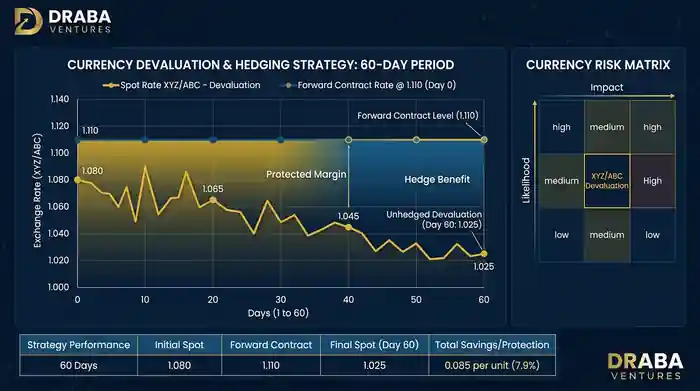
If the local currency depreciates by 5% over those 60 days, the importer's cost of goods essentially increases by 5%, destroying the typical 3-5% net margin of bulk commodity trading. (You can model this using our Cost Calculator).
Financial Instruments for Importers
| Instrument | How it Works | Best For |
|---|---|---|
| Forward Contract | Locks in a guaranteed exchange rate for settlement on a specific future date (e.g., Day 60). | Total risk elimination; fixed-margin contracts. |
| Range Forward (Collar) | Sets a floor and ceiling rate. You are protected from extreme devaluation but can still benefit from minor appreciation. | Importers wanting downside protection with some upside potential. |
| Cross-Currency Swap | Exchanges principal and interest in one currency for another over a set period. | Large institutional buyers managing ongoing, multi-shipment supply chains. |
Step-by-Step FX Risk Management Matrix
- Invoice Costing: Calculate your exact CIF cost in USD.
- Margin Buffering: Price your domestic sales assuming a 2% worst-case currency fluctuation if you choose not to hedge.
- Bank Hedging: Simultaneously execute a Forward Contract with your corporate bank on the exact day you open the LC. Pay the minor premium to guarantee the rate.
- Local Sales Alignment: Match your domestic distributor payment terms to settle 5 days prior to your LC maturity date, ensuring local liquidity to execute the Forward Contract.
Strategic Advisory
Draba Ventures assists large-scale buyers by offering highly flexible TT and LC terms, allowing importers to time their currency conversions during favorable macroeconomic windows.